

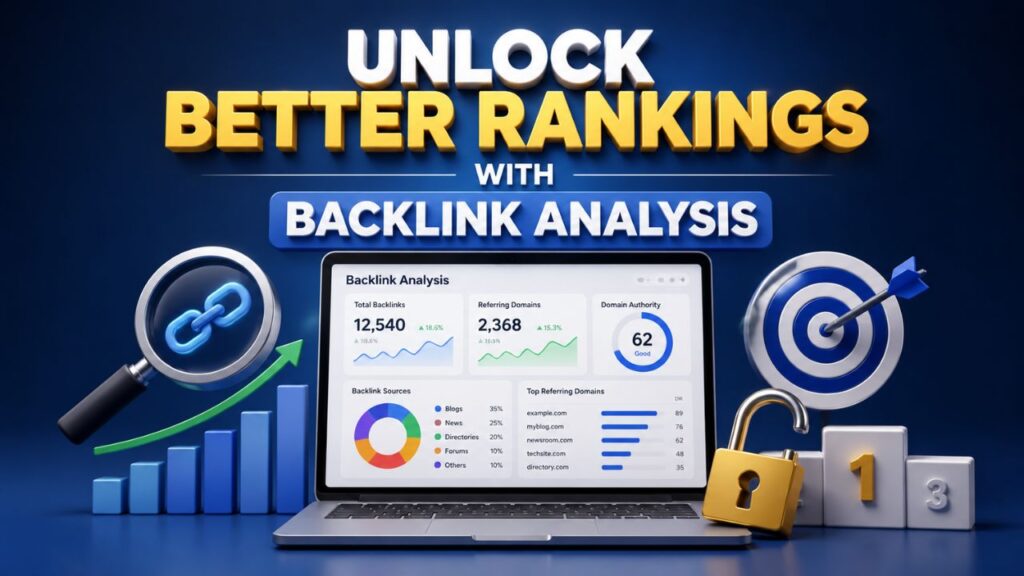
Search engine optimization continues to evolve, but backlinks remain one of the strongest signals used to evaluate website authority and relevance. While creating quality content is essential, understanding who links to your website and why they link can reveal opportunities that significantly improve your search performance. This is where Backlink Analysis becomes an important part of a successful digital marketing strategy.
Many businesses focus heavily on content creation and keyword optimization but overlook the value hidden within their backlink profile. A detailed review of your backlinks can help identify strengths, weaknesses, competitive opportunities, and potential risks that may be affecting your rankings.
Whether you want to improve organic traffic, increase domain authority, or strengthen your overall SEO efforts, backlink analysis provides the insights needed to make informed decisions. In this guide, we will explore how backlink analysis works, why it matters, and how you can use it to achieve better search visibility.
Table of Contents
What Is Backlink Analysis?
Backlink Analysis is the process of evaluating all external links pointing to a website. The goal is to understand the quality, relevance, authority, and overall impact of those links on search engine rankings.
Every backlink acts as a signal that helps search engines determine whether your content deserves visibility in search results. However, not all backlinks carry the same value. Some links can strengthen your website authority, while others may negatively affect SEO performance.
A thorough backlink analysis examines:
- Referring domains
- Link quality
- Anchor text usage
- Link relevance
- Follow and nofollow attributes
- Link growth patterns
- Competitor backlink profiles
Understanding these factors helps marketers make smarter decisions about link building and website optimization.
Understanding Backlinks in SEO
Backlinks are links from one website to another. When a reputable website links to your content, search engines often interpret it as a vote of confidence.
These links contribute to:
- Website authority
- Trustworthiness
- Organic rankings
- Search visibility
- Content credibility
The more relevant and authoritative your backlinks are, the more likely search engines are to view your content as valuable.
Why Backlink Analysis Matters for Search Visibility?
Search engines continuously assess backlink profiles to determine which pages deserve higher rankings. Without regular analysis, you may miss valuable opportunities or fail to identify harmful links.
Backlink analysis helps you:
- Discover high performing content
- Identify toxic backlinks
- Monitor SEO health
- Improve link building campaigns
- Understand competitor strategies
- Strengthen topical authority
For digital marketers, these insights can directly influence ranking improvements.
Why Backlink Analysis Is Essential for Modern SEO?
SEO today is no longer about collecting as many backlinks as possible. Search engines now evaluate link quality, relevance, and context far more carefully than they did in the past.
Impact on Organic Rankings
High quality backlinks continue to be among the strongest ranking factors. Links from authoritative and relevant websites help search engines trust your content more quickly.
When your backlink profile contains credible sources, your pages often gain better opportunities to rank for competitive keywords.
Influence on Domain Authority
Although domain authority itself is not a direct ranking factor, it serves as a useful indicator of a website’s strength.
Strong backlink profiles generally contribute to:
- Greater credibility
- Increased trust signals
- Improved ranking potential
- Better indexing efficiency
Analyzing backlinks helps identify which links contribute most to authority growth.
Relationship Between Backlinks and Trust Signals
Trust plays a significant role in modern SEO.
Search engines look for indicators that suggest a website provides reliable information. Relevant backlinks from respected websites often reinforce those trust signals.
A healthy backlink profile demonstrates that other websites find your content useful enough to reference and recommend.
Role in Competitive SEO Strategy
Competitors often reveal valuable SEO opportunities through their backlink profiles.
By analyzing competitor backlinks, you can discover:
- Potential outreach targets
- Industry publications
- Content gaps
- Partnership opportunities
- Link acquisition strategies
These insights can help accelerate your own SEO growth.
Key Metrics to Evaluate During Backlink Analysis
A successful backlink analysis goes beyond simply counting links.
Referring Domains
Referring domains represent unique websites linking to your content.
Generally, earning links from multiple authoritative domains provides greater value than receiving numerous links from a single source.
Focus on:
- Domain diversity
- Industry relevance
- Authority levels
- Geographic relevance
Link Authority
- Not every website carries equal influence.
- Links from highly trusted websites typically pass stronger authority signals than links from low quality websites.
When evaluating link authority, consider:
- Website reputation
- Industry relevance
- Content quality
- Organic visibility
Anchor Text Distribution
Anchor text refers to the clickable text used in a hyperlink.
A natural anchor text profile often includes:
- Branded anchors
- Generic anchors
- Partial match keywords
- Naked URLs
Over-optimized anchor text can appear manipulative and may negatively impact rankings.
Follow vs NoFollow Links
Both link types can contribute to a balanced backlink profile.
Follow links typically pass authority signals, while nofollow links may still provide:
- Referral traffic
- Brand exposure
- Audience reach
- Natural link diversity
Maintaining a healthy mix is generally beneficial.
Link Relevance
Relevance remains one of the most important factors in modern link evaluation.
For example, a digital marketing website benefits more from backlinks originating from marketing, SEO, advertising, and business-related websites than from unrelated industries.
Relevant backlinks help strengthen topical authority and contextual trust.
How Backlink Analysis Improves Search Rankings?
Backlink analysis provides actionable insights that directly influence SEO performance.
Identifying High Quality Links
By reviewing your backlink profile, you can determine which links contribute most to ranking improvements.
These findings help guide future link acquisition efforts toward similar opportunities.
Discovering Toxic Backlinks
Not every backlink helps your website.
Some links may come from:
- Spam websites
- Link farms
- Irrelevant directories
- Low quality networks
Identifying these links early helps protect long term SEO performance.
Finding Link Building Opportunities
Backlink analysis often reveals websites that actively link to industry content.
These websites may become valuable targets for:
- Guest contributions
- Resource page outreach
- Content partnerships
- Industry collaborations
This approach helps build sustainable authority.
Strengthening Existing SEO Efforts
Backlink insights complement other SEO activities, including:
- Content marketing
- Technical SEO
- Keyword optimization
- Digital PR
When all these elements work together, rankings often improve more consistently.
Competitor Backlink Analysis for Better SEO Results
One of the most valuable aspects of backlink analysis is understanding what works for competitors.
Why Analyze Competitor Backlinks?
- Competitor research helps uncover proven strategies within your industry.
- Instead of guessing where to build links, you can identify websites already linking to similar content.
Finding Competitor Link Sources
Reviewing competitor backlink profiles often reveals:
- Industry blogs
- News websites
- Resource pages
- Educational websites
- Business directories
These sources may provide opportunities for your own outreach campaigns.
Identifying Content That Attracts Links
Some content formats naturally earn more backlinks.
Examples include:
- Industry guides
- Original research
- Statistics pages
- Checklists
- Educational resources
Analyzing competitor success helps determine which formats resonate most with audiences.
Backlink Analysis and Content Marketing
- Content and backlinks work best when aligned.
- Strong content attracts links, while strong links increase content visibility.
Identifying Link Worthy Content
- Backlink analysis helps identify which pages earn links naturally.
- These insights can guide future content creation efforts and improve overall content performance.
Creating Linkable Assets
Some content types consistently attract backlinks:
- Comprehensive guides
- Industry reports
- Research studies
- Templates
- Checklists
Developing valuable assets increases the likelihood of earning quality backlinks over time.
Aligning Content With Search Intent
- Search engines prioritize content that satisfies user intent.
- When content addresses real questions and provides practical value, it becomes more likely to attract both readers and backlinks.
Best Practices for Effective Backlink Analysis
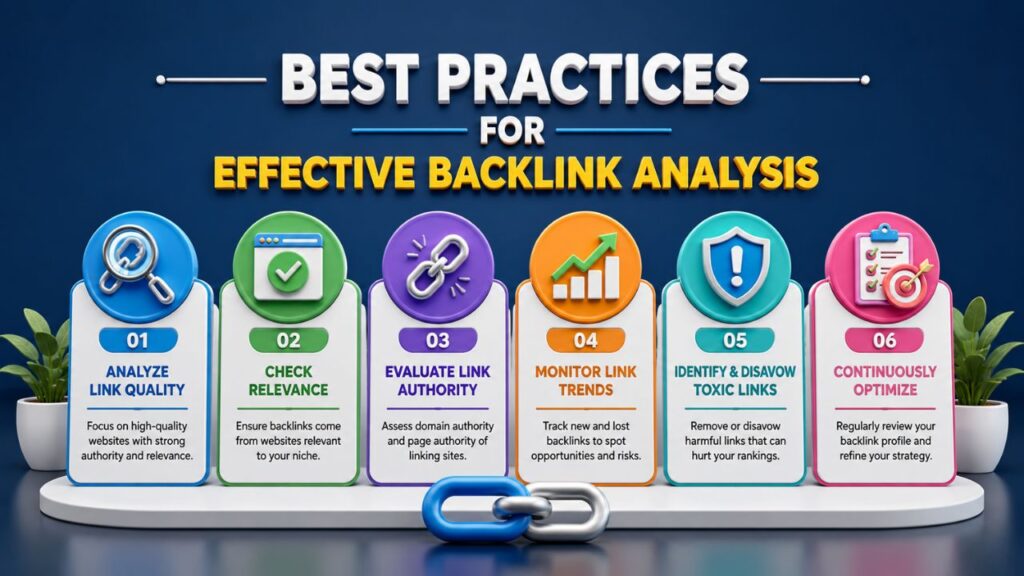
To maximize results, backlink analysis should become an ongoing process.
Conduct Regular Audits
Regular reviews help identify changes before they become problems.
Monthly audits can reveal:
- New backlinks
- Lost backlinks
- Toxic links
- Emerging opportunities
Focus on Quality Over Quantity
- A few highly relevant backlinks often provide greater value than hundreds of low quality links.
- Always prioritize relevance, authority, and trustworthiness.
Monitor Competitor Activity
- Competitor strategies change frequently.
- Regular monitoring helps identify new opportunities and maintain a competitive advantage.
Track Link Growth Trends
- Consistent growth usually indicates a healthy backlink profile.
- Monitoring trends helps measure the effectiveness of your SEO and content marketing initiatives.
Future Trends in Backlink Analysis
As AI driven search becomes more sophisticated, backlink evaluation is evolving.
Search engines increasingly assess:
- Entity relationships
- Semantic relevance
- Topical authority
- Trustworthiness
- Content quality
Rather than relying solely on link volume, modern algorithms focus on the context and credibility surrounding each backlink. Businesses that prioritize quality, relevance, and user value will be better positioned for long term search success.
Conclusion
Backlink Analysis remains one of the most effective ways to improve SEO performance and strengthen online visibility. By understanding the quality, relevance, and authority of your backlinks, you can uncover opportunities that support sustainable ranking growth.
A well maintained backlink profile not only helps improve organic rankings but also strengthens trust, credibility, and topical authority. When combined with quality content, technical optimization, and a strategic digital marketing approach, backlink analysis becomes a powerful tool for achieving long term success in search engines, AI search platforms, and voice search environments.
Frequently Asked Questions
What is backlink analysis in SEO?
Backlink analysis is the process of evaluating inbound links to understand their quality, relevance, authority, and impact on search engine rankings.
Why is backlink analysis important for rankings?
It helps identify valuable backlinks, detect harmful links, discover link building opportunities, and improve overall SEO performance.
How often should backlink analysis be performed?
Most websites benefit from monthly backlink audits, while highly competitive industries may require more frequent monitoring.
What are toxic backlinks?
Toxic backlinks are low quality or spammy links that may negatively affect search visibility and website credibility.
Can backlink analysis improve organic traffic?
Yes. By identifying quality link opportunities and strengthening your backlink profile, you can improve rankings and attract more organic traffic.
What metrics should be reviewed during backlink analysis?
Important metrics include referring domains, link authority, anchor text distribution, link relevance, follow and nofollow ratios, and backlink growth trends.


