

Google Search is changing quickly. AI Overviews have become an important part of the search experience, giving users a direct summary before they explore traditional search results.
For website owners and SEO professionals, this raises an important question: How should SEO change when Google can answer part of a search query directly?
The answer is not to abandon traditional SEO. Google has stated that its AI search features rely on the same core Search and quality systems that support traditional search. Its current guidance also emphasizes useful, original content, strong technical foundations, clear organization, and a good page experience.
What is changing is the way users discover information.
A page can now compete for traditional organic rankings while also being considered as a source for an AI generated response. This makes AI Overviews, AI search, search intent, topical relevance, and content quality increasingly important areas for SEO in 2026.
Table of Contents
What Are Google AI Overviews?
Google AI Overviews are AI generated summaries that appear within Google Search when its systems determine that a generated response can help answer a query.
Instead of requiring users to open several pages before understanding a topic, an AI Overview can bring together information from relevant web sources and provide links for further reading.
Google has continued expanding AI Overviews and AI Mode during 2026. The company says AI Overviews now have more than 2.5 billion monthly active users, while AI Mode has passed one billion monthly users.
How AI Overviews Work
AI Overviews use information retrieved from Google’s Search index to generate responses. Google’s documentation explains that its generative AI features use techniques such as retrieval augmented generation and query fan out to find relevant information for a user’s question.
This matters for SEO because a single search can involve several related information needs.
For example, a user may ask a broad question, while Google’s systems may identify several related questions that help construct the response.
Content therefore needs to do more than repeat an exact keyword. It should provide clear, useful information that addresses the subject properly.
Why AI Overviews Matter for SEO
AI Overviews can change how search visibility works.
Traditional SEO usually focuses on:
• Organic rankings
• Search impressions
• Click through rate
• Organic traffic
• Conversions
AI search adds another layer:
• Visibility within AI generated responses
• Links appearing in AI responses
• Brand discovery
• Coverage of related search questions
• Visibility across conversational searches
Google has also introduced additional Search Console insights for generative AI features, including information about pages appearing in AI responses and related impression data. As of August 31, 2026, Google says these capabilities have been rolled out worldwide.
AI Overviews do not replace SEO. They change the environment in which SEO operates.
Search Is Becoming More Conversational
Users can ask Google longer and more specific questions.
Instead of searching for a short phrase, someone may describe a problem, add several conditions, and continue with follow up questions.
Google has continued developing conversational interactions between AI Overviews and AI Mode, allowing users to continue exploring a topic from an initial search.
This makes natural language and question based content increasingly useful.
Content should answer questions in a way that matches how people actually search.
Rankings Are Not the Only Visibility Signal
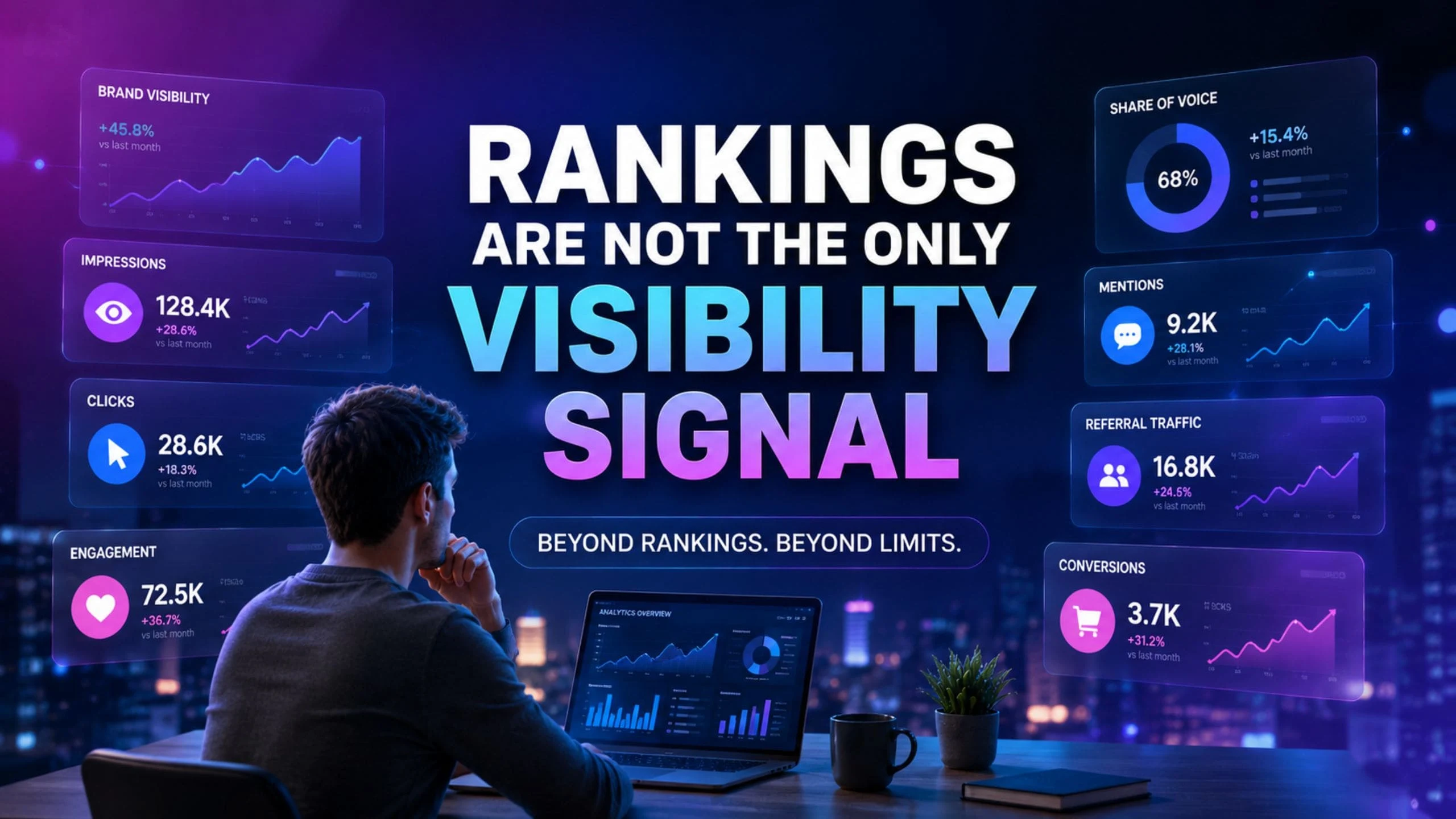
Ranking well remains important, but it is no longer the only way a page can gain visibility in an AI enhanced search result.
A search page may contain:
• An AI Overview
• Traditional organic results
• Featured search elements
• Images or videos
• Additional questions
• Links included within an AI response
This means SEO reporting needs to look beyond a single ranking position.
A useful strategy should consider visibility, impressions, clicks, engagement, conversions, and the broader presence of a website across search experiences.
Search Intent Matters More Than Exact Match Keywords
Keyword research remains valuable, but search intent provides the context behind those keywords. A strong keyword research strategy should consider what users are actually trying to accomplish when they search.
Consider the main types of intent:
• Informational intent: The user wants to understand something.
• Commercial investigation: The user is comparing options before making a decision.
• Transactional intent: The user is ready to take action.
• Navigational intent: The user is looking for a specific website or destination.
Content created around intent can answer the actual information need rather than simply repeating the target keyword.
Topical Depth Has Greater Value
A strong article should cover its subject thoroughly without adding unnecessary information. Building comprehensive content also supports topical authority SEO by demonstrating clear expertise around a specific subject.
• Definitions
• Related questions
• Important factors
• Advantages and limitations
• Practical considerations
• Frequently asked questions
• Relevant supporting information
That can include:
Internal links can then connect related articles, strengthen the overall topic structure, and help search engines understand the relationship between pages.
This approach also gives readers a clearer path to additional information.
Does Traditional SEO Still Matter for AI Overviews?
Yes.
Google’s own guidance is clear that existing SEO practices continue to matter for generative AI search. AI features use Google’s existing Search index and core ranking and quality systems to retrieve information.
That means website owners should not treat AI SEO as a completely separate discipline.
Technical SEO Still Provides the Foundation
A page needs to be accessible to search systems before its content can contribute to search visibility.
Important areas include:
• Crawlability
• Indexability
• Internal linking
• Mobile usability
• Page experience
• Accessible text
• Accurate structured data
• Clear site architecture
Google’s guidance also recommends ensuring that important content is available in text and that structured data accurately represents the visible content on a page.
Helpful Content Still Matters
AI search does not remove the need for useful content.
Google’s current guidance emphasizes unique, valuable, non-commodity information and a good page experience.
Useful content should:
• Answer the reader’s question clearly
• Provide accurate information
• Explain concepts in understandable language
• Avoid unnecessary repetition
• Add information that genuinely helps the reader
• Keep important facts easy to find
• Support effective SEO content planning by aligning topics with search intent and user needs
The objective should be to satisfy the information need rather than write content simply to increase word count.
How to Optimize Content for AI Overviews
There is no separate formula that guarantees inclusion in an AI Overview.
Google says there is no special schema or additional technical requirement specifically needed for AI Overviews or AI Mode. Instead, existing SEO fundamentals remain important.
Still, content can be organized in ways that make information clearer for both readers and search systems.
Answer the Main Question Early
Start with a concise answer to the main question.
Readers should not have to move through several paragraphs before finding the basic explanation.
A useful structure is:
Question → Direct answer → Explanation → Supporting information
This format can also work well for voice search and answer engine optimization because the content provides a clear response before expanding on the subject.
Use Clear H2 and H3 Headings
Descriptive headings make long articles easier to understand.
Instead of using vague headings, use headings that clearly communicate the question or topic being addressed.
For example:
H2: How Does AI Search Affect SEO?
is more useful than:
H2: What You Should Know
Clear headings help readers scan an article and locate the information they need.
Cover Related Questions Naturally
One main keyword can represent several different questions.
For the keyword AI Overviews, related questions may include:
• What are Google AI Overviews?
• How do AI Overviews work?
• How can websites appear in AI Overviews?
• Does SEO still matter for AI search?
• Can AI Overviews reduce website traffic?
• How should content be optimized for AI search?
Addressing related questions can improve topical coverage while creating a more useful resource.
Add Original and Useful Information
Search systems need information they can understand and retrieve, but readers also need a reason to trust the page.
Useful content can include:
• Relevant statistics
• Primary sources
• Clear definitions
• Accurate explanations
• Original research
• Expert sourced information
• Updated facts
Avoid adding information simply because it contains another keyword.
Strengthen Internal Linking
Internal links help readers discover related information and help search engines understand connections between pages.
A strong internal linking structure can connect:
Pillar page → Supporting article → Related article → Deeper resource
Anchor text should describe the destination naturally.
Use Structured Data Correctly
Structured data can help search engines understand the content and purpose of a page.
However, it should not be treated as a shortcut to AI Overview visibility.
Google’s documentation states that there is no special structured data required for AI Overviews or AI Mode. Structured data should accurately describe the visible content rather than being added solely for AI search.
AI SEO vs Traditional SEO: What Is Actually Different?
AI search introduces new ways for information to appear, but the foundation remains familiar.
| Traditional SEO | SEO for AI Search |
|---|---|
| Keyword rankings | Broader search visibility |
| Organic snippets | AI generated responses and links |
| Short keyword queries | Longer conversational questions |
| Individual keywords | Topics and related concepts |
| Clicks and traffic | Visibility, clicks and engagement |
| Search result pages | AI enhanced search experiences |
The important point is simple:
AI search does not make SEO irrelevant. It makes useful SEO more important.
Google’s own guidance describes optimization for generative AI search as an extension of search optimization rather than a replacement for SEO.
Common AI Overview SEO Myths to Avoid
The growth of AI search has created plenty of advice that is not supported by Google’s guidance.
You Need Special AI Schema
There is no special AI Overview schema that guarantees visibility.
Google recommends using supported structured data correctly and ensuring that it matches the visible page content.
Keyword Stuffing Helps AI Systems
Repeating a keyword excessively does not make content more useful.
Natural language, clear structure, relevant terminology, and complete answers provide a better experience.
AI Generated Content Automatically Gets Cited
Using AI to create an article does not guarantee that Google will reference it.
The content still needs to provide value, accuracy, relevance, and useful information.
You Need GEO Instead of SEO
GEO, meaning Generative Engine Optimization, and AEO, meaning Answer Engine Optimization, are terms used in the SEO industry.
However, Google describes optimization for its generative AI search experiences as part of SEO. Its systems continue to rely on established Search and quality mechanisms.
Ranking Number One Guarantees an AI Overview Citation
There is no guarantee that the first organic result will be selected as a source for an AI Overview.
Research published in 2026 has also found that some sources cited in AI Overviews may not appear among the traditional first page results, showing that AI generated search visibility cannot be reduced to a single organic ranking position.
How AI Generated Content Affects SEO in 2026
AI can assist with content research, organization, outlining, and editing.
However, producing large quantities of similar content without adding meaningful value can create problems.
Google’s guidance warns against using generative AI to produce many pages without providing additional value to users.
A sensible content process should focus on:
• Accurate research
• Human review
• Clear organization
• Original information
• Useful explanations
• Proper source attribution
• Regular content updates
The goal is not to produce more pages. The goal is to produce pages that deserve to be found.
How to Measure SEO Performance in the Age of AI Overviews
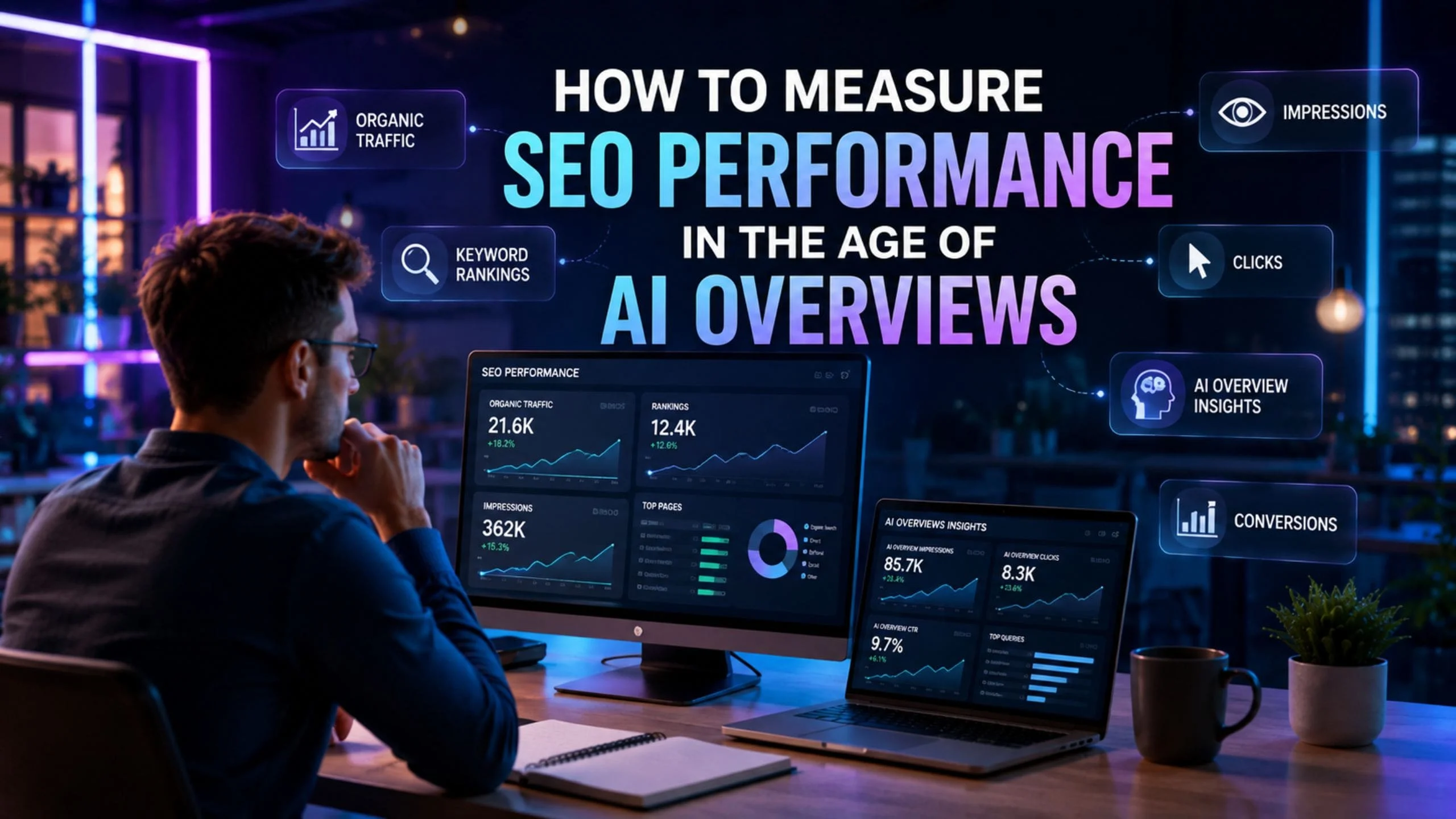
Traditional SEO metrics remain useful, but AI search makes measurement more detailed.
Traditional SEO Metrics
Continue monitoring:
• Organic traffic
• Impressions
• Click through rate
• Keyword rankings
• Indexed pages
• Conversions
• Engagement
AI Search Visibility
Where available, also monitor:
• Pages appearing in generative AI search features
• AI related impressions
• Search queries associated with visibility
• Brand searches
• Referral traffic
• Engagement after organic visits
Google has begun providing Search Console insights related to pages appearing in generative AI responses, giving website owners additional information about their visibility.
Do Not Judge SEO Only by Clicks
AI search can influence how users interact with search results.
Some users may receive enough information directly from an AI Overview, while others may click a source because they want more detail.
Google says its own data shows that AI search can generate higher quality clicks, while independent research has reported lower click rates in searches that produce AI Overviews. These findings show that traffic effects can vary by query and search behavior.
For that reason, SEO performance should be evaluated using several signals rather than one traffic number.
AI Overview SEO Checklist for 2026
Before publishing an article, check whether it meets these requirements:
• Does it answer a clear search intent?
• Is the main answer easy to find?
• Are the H2 and H3 headings descriptive?
• Does the article cover relevant related questions?
• Is the information accurate and current?
• Does the content provide genuine value?
• Are important facts supported by reliable sources?
• Is the page easy for search engines to crawl and index?
• Are internal links relevant?
• Is structured data accurate?
• Is important information available as text?
• Does the article avoid unnecessary keyword repetition?
• Has the content been reviewed for accuracy and clarity?
What Will SEO Look Like Beyond 2026?
SEO is likely to become broader as search interfaces continue to evolve.
The basic principles, however, remain familiar.
Successful websites will need to combine:
Technical accessibility + useful content + search intent + topical relevance + trusted information + strong user experience
AI search may change the format in which users discover information, but people still need reliable answers.
The role of SEO is therefore moving beyond ranking for a keyword. It is increasingly about making valuable information easy to discover, understand, verify, and explore.
Frequently Asked Questions About AI Overviews and SEO
What are AI Overviews in Google Search?
Ans: AI Overviews are AI generated summaries that appear within Google Search for queries where Google determines that a generated response can help users understand the topic. They can include links to relevant web pages for additional information.
Do AI Overviews replace traditional SEO?
Ans: No. Google says its generative AI search features rely on core Search ranking and quality systems, so traditional SEO fundamentals remain relevant.
How can I optimize my website for AI Overviews?
Ans: Focus on established SEO practices such as creating useful original content, matching search intent, maintaining strong technical SEO, organizing content clearly, using relevant internal links, and providing accurate information. Google does not require special AI Overview schema.
Does structured data help with AI Overviews?
Ans: Structured data can help search engines understand page content when implemented correctly, but Google does not require special structured data for AI Overviews or AI Mode. The markup should accurately represent visible page content.
Does ranking number one guarantee an AI Overview citation?
Ans: No. Organic ranking and inclusion in an AI Overview are not the same thing. Research has found that some AI Overview sources may not appear among the traditional first page results.
Is GEO replacing SEO?
Ans: No. GEO is commonly used to describe efforts focused on visibility in generative AI search. Google currently frames optimization for its generative AI features as part of SEO.
Will AI Overviews reduce website traffic?
Ans: The effect varies by query and user behavior. Google reports stable overall organic click volume and higher quality clicks in its own data, while independent research has found lower click activity on some search pages containing AI Overviews.
Does AI generated content rank in Google?
Ans: AI generated content can appear in Google Search, but using AI does not automatically make content useful or eligible for strong visibility. Google emphasizes value, quality, originality, and satisfying user needs rather than the method used to create the content.
Final Thoughts
AI Overviews are changing the way information appears in Google Search, but they do not change the basic purpose of SEO.
People still want accurate answers. They still want useful resources. They still need trustworthy websites when a short search response is not enough.
For website owners, the practical approach is to keep the fundamentals strong while adapting content to a more conversational search experience.
Create pages that answer real questions. Organize information clearly. Cover topics thoroughly. Maintain a technically accessible website. Support important claims with reliable sources. Keep content useful and current.
That approach works for traditional Google Search while also creating a stronger foundation for visibility across AI Overviews and other AI search experiences in 2026.

