

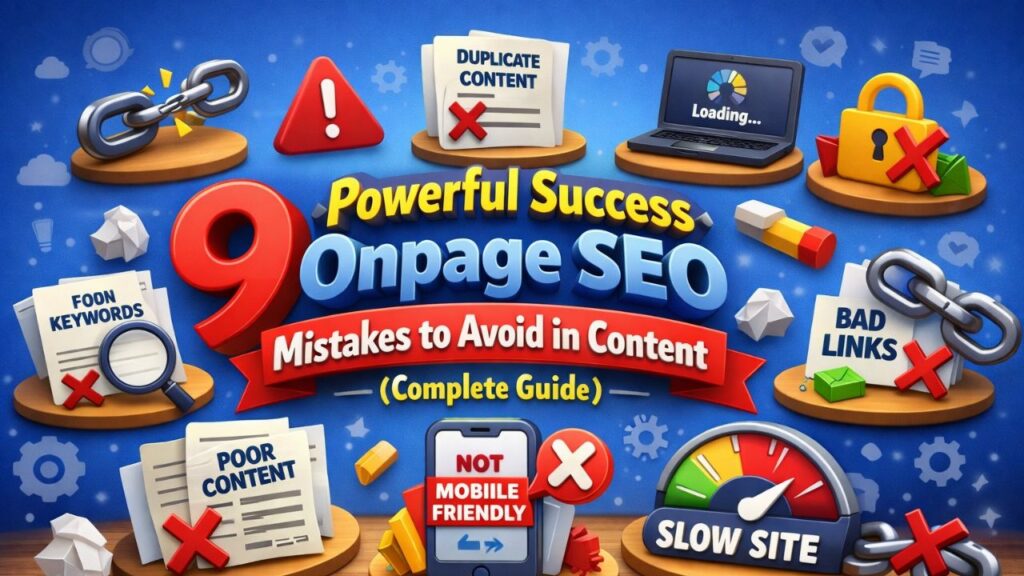
Content creation is easier than ever. Ranking that content on Google is not.
Many websites publish blog posts consistently but still struggle to reach the first page of search results. The reason is rarely a lack of effort. More often, it’s hidden optimization gaps that silently weaken your content’s ranking potential. Understanding the onpage seo mistakes to avoid in content is one of the most important steps toward consistent organic growth. When these mistakes are fixed, even existing content can experience noticeable ranking improvements.
This guide explains the most impactful errors, how they affect your visibility, and how to correct them using practical seo content optimization strategies.
Table of Contents
What Is On-Page SEO for Content?
On-page SEO refers to optimizing elements within your content so search engines can clearly understand, trust, and rank it. This includes:
- Content structure
- Keyword placement
- Internal linking
- Readability
- Freshness and updates
Modern SEO is no longer about keyword repetition. Search engines now evaluate how helpful, structured, and easy your content is for readers.
When your content aligns with user intent and technical optimization, Google sees it as valuable and worthy of visibility.
Why Many Blogs Fail to Rank Despite Publishing Regularly?
Publishing frequently does not guarantee visibility. Many blogs stagnate because they ignore critical optimization factors such as:
- Weak search intent alignment
- Missing internal links
- Poor readability
- Lack of content refresh strategy
Another major ranking factor is content update frequency to boost rankings. Google favors content that remains accurate, current, and continuously improved.
SEO Friendly Content Structure Checklist
Before diving into mistakes, here’s a quick seo friendly content structure checklist you should follow for every article:
- One clear H1 headline
- Logical H2 and H3 hierarchy
- Keyword in introduction and conclusion
- Short paragraphs and clear formatting
- Internal links to relevant articles
- Optimized images with alt text
- Strong meta title and description
This checklist alone can dramatically improve indexing and rankings.
9 Powerful Success Onpage SEO Mistakes to Avoid in Content
Let’s explore the mistakes that quietly stop content from ranking.
1. Ignoring Search Intent Alignment
One of the biggest onpage seo mistakes to avoid in content is writing without understanding user intent.
Search intent types include:
- Informational
- Navigational
- Transactional
If your content does not match the user’s goal, it will struggle to rank no matter how well written it is.
How to fix it
- Analyze top ranking pages before writing
- Match content format and depth
- Answer the primary question early
2. Poor Keyword Placement Strategy
Keyword stuffing is outdated, but under-optimization is equally harmful.
Effective seo content optimization strategies focus on natural keyword placement in key areas:
- Title
- First 100 words
- Headings
- Image alt text
- Conclusion
Balanced placement signals relevance without harming readability. This remains one of the most common onpage seo mistakes to avoid in content today.
3. Weak Headline & Meta Optimization
Your headline determines whether people click your content.
A strong title:
- Uses emotional triggers
- Includes the primary keyword
- Promises value
Click-through rate influences rankings, making this a critical onpage seo mistakes to avoid in content.
4. Keyword Cannibalization Across Articles
Publishing multiple articles targeting the same keyword confuses search engines.
This issue is solved through keyword cannibalization and content structure fixes.
How to fix cannibalization:
- Merge overlapping articles
- Use internal linking
- Assign one primary keyword per page
Ignoring this problem is another major onpage seo mistakes to avoid in content.
5. No Internal Linking Strategy
Internal links help search engines discover and understand your content ecosystem.
Benefits:
- Improves crawlability
- Builds topical authority
- Increases time on site
Missing internal links is a frequent onpage seo mistakes to avoid in content that reduces ranking potential.
6. Ignoring Content Readability Signals
Google evaluates user engagement signals such as bounce rate and time on page. These are strongly influenced by readability.
improving content readability for SEO involves:
- Short paragraphs
- Bullet points
- Clear headings
- Conversational tone
Readable content keeps users engaged and improves ranking signals. This is a crucial onpage seo mistakes to avoid in content.
7. No Content Update Strategy
Fresh content ranks better than outdated content.
A consistent content update frequency to boost rankings shows search engines that your site is active and reliable.
Best practices:
- Update statistics regularly
- Add new sections
- Improve outdated information
Skipping updates is a critical onpage seo mistakes to avoid in content.
8. Missing Image & Media Optimization
Images enhance engagement and SEO performance.
Optimize by:
- Compressing images
- Writing descriptive alt text
- Using relevant filenames
Visual optimization is often overlooked, making it another key onpage seo mistakes to avoid in content.
9. Weak Content Depth & Topic Coverage
Thin content rarely ranks. Search engines prefer comprehensive resources that fully answer user queries.
To improve depth:
- Cover subtopics thoroughly
- Use semantic keywords
- Create topic clusters
Insufficient depth remains one of the most damaging onpage seo mistakes to avoid in content.
Step-by-Step SEO Content Optimization Workflow
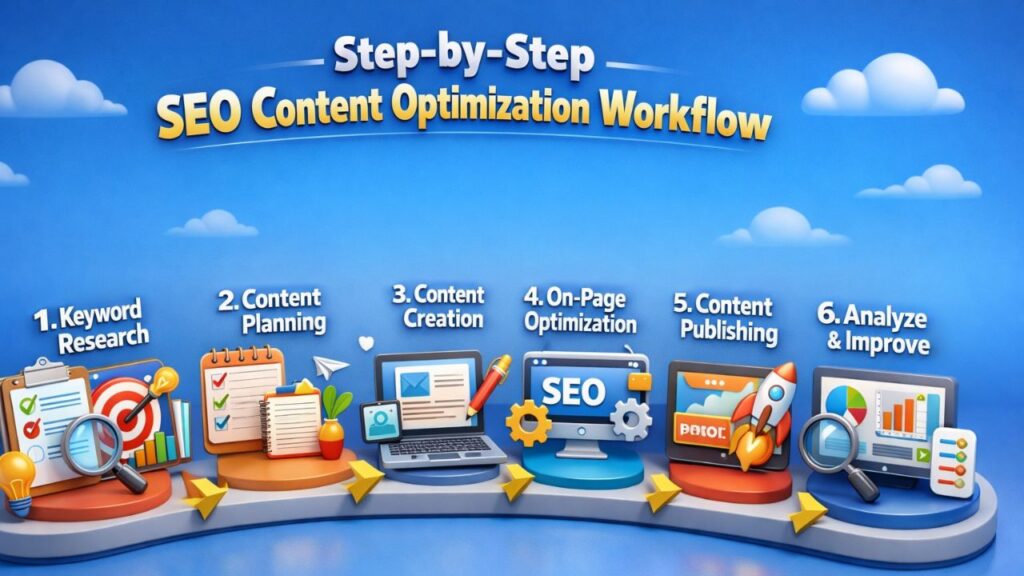
Implement these seo content optimization strategies for every article:
- Keyword research
- Search intent analysis
- Outline creation
- Structured writing
- Internal linking
- Image optimization
- Content refresh plan
This workflow ensures consistency and long-term ranking growth.
Quick On-Page SEO Checklist
Use this condensed seo friendly content structure checklist before publishing:
- Keyword in title and intro
- Clear heading hierarchy
- Internal links added
- Images optimized
- Readability improved
- Content updated regularly
Conclusion
Ranking content is not about publishing more. It’s about publishing smarter.
By avoiding these onpage seo mistakes to avoid in content, you can improve visibility, increase organic traffic, and strengthen long-term authority. Implement these strategies consistently, and your content will be better positioned to reach the first page of search results.
FAQs
What are the most common on-page SEO mistakes?
Ignoring search intent, poor keyword placement, weak internal linking, and outdated content are the most common mistakes.
How often should blog content be updated for SEO?
Refreshing content every 3–6 months helps maintain rankings and improves relevance.
Does readability affect rankings?
Yes. High readability improves engagement metrics, which influence search rankings.
How do I fix keyword cannibalization?
Merge overlapping content, assign unique keywords, and use internal linking strategically.
What is the best content structure for SEO?
A clear heading hierarchy, optimized keywords, internal links, and strong readability form the ideal SEO content structure.


