

Page speed is no longer just a technical concern—it’s a strategic SEO priority. When your website loads slowly, it doesn’t just frustrate visitors; it quietly undermines your visibility, traffic, and growth potential. Search engines now evaluate performance as a core quality signal, which means ignoring speed can cost you rankings even if your content is excellent.
Understanding site speed SEO issues helps you see why performance is closely tied to how search engines and users perceive your site. When speed improves, trust improves—and that trust shows up in rankings, engagement, and conversions.
Table of Contents
Why Site Speed Matters More Than Ever?
Search engines aim to deliver the best possible experience to users. That experience doesn’t begin with content—it begins with load time. If your pages hesitate before displaying meaningful content, users lose patience and search engines take notice.
From an SEO perspective, speed affects:
- How efficiently your pages are crawled
- How users interact with your site
- How algorithms assess overall page experience
When speed problems persist, site speed SEO issues become a limiting factor that prevents your content from reaching its full ranking potential.
Understanding Site Speed in an SEO Context
Site speed isn’t a single metric. It’s a collection of performance signals that describe how quickly and smoothly a page loads and becomes usable. Search engines evaluate these signals to determine whether a site provides a satisfactory experience.
Common performance indicators include:
- How fast primary content appears
- How quickly users can interact with the page?
- Whether the layout shifts unexpectedly
When these metrics fall short, site speed SEO issues begin to affect crawl efficiency and ranking stability. Performance improvement, in this context, isn’t just about milliseconds—it’s about removing friction from the user journey.
How Page Speed Influences Search Rankings?
Page speed directly influences how search engines rank your site relative to competitors. When two pages offer similar relevance and authority, performance often becomes the deciding factor.
Slow pages send negative signals such as:
- Poor user experience
- Increased bounce rates
- Reduced engagement
Over time, unresolved site speed SEO issues weaken your ability to compete in search results. Performance improvement strengthens your position by aligning your site with search engine expectations for usability and quality.
Page Speed and Organic Traffic: The User Behavior Connection
Traffic doesn’t disappear randomly—it reacts to experience. When pages load slowly, users leave before engaging, even if your content is valuable.
Slow load times often lead to:
- Higher bounce rates
- Lower dwell time
- Fewer pages viewed per session
These behavior signals tell search engines that users aren’t satisfied. As a result, site speed SEO issues indirectly reduce organic traffic by lowering engagement metrics. Performance improvement helps retain visitors, encouraging them to stay longer and interact more deeply with your site.
Common Causes of Poor Site Performance
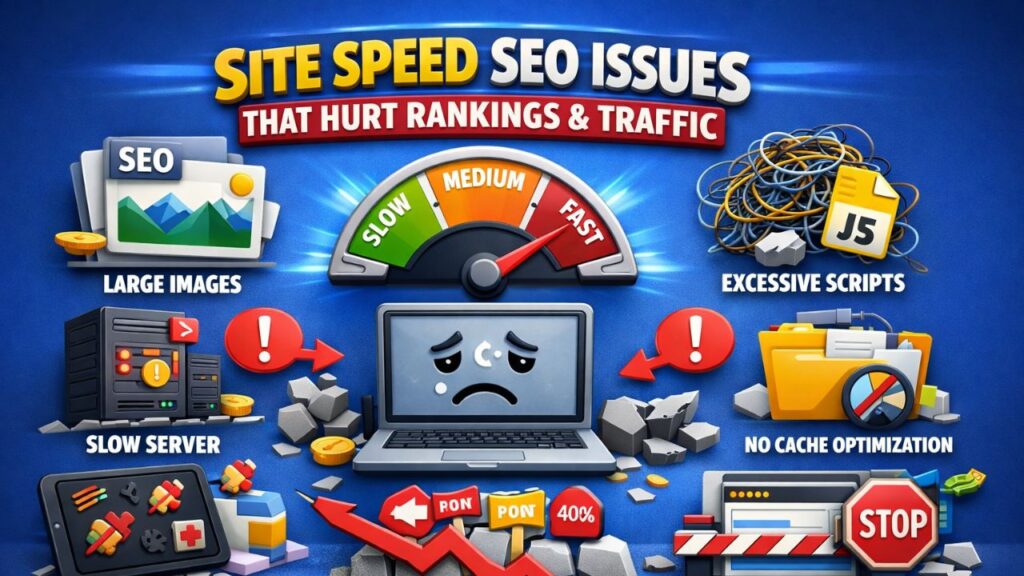
Many speed problems develop gradually and go unnoticed until rankings decline. The most common contributors include:
- Large, uncompressed images
- Excessive scripts and stylesheets
- Slow server response times
- Lack of caching
- Heavy page builders or bloated themes
When these elements accumulate, site speed SEO issues become embedded into your site structure. Performance improvement requires identifying these bottlenecks and resolving them systematically rather than relying on quick fixes.
Core Web Vitals and Performance Signals
Core Web Vitals play a major role in how search engines assess page experience. These metrics focus on loading speed, interactivity, and visual stability—all of which are directly affected by performance choices.
If your site struggles with these metrics, site speed SEO issues are likely holding back rankings. Performance improvement aligned with Core Web Vitals helps ensure your pages load smoothly, respond quickly, and remain visually stable across devices.
Technical SEO and Speed: A Shared Responsibility
Technical SEO and performance are deeply connected. Poorly structured code, unnecessary plugins, and inefficient scripts increase load time and reduce crawl efficiency.
From an indexing perspective, slow pages:
- Consume more crawl resources
- Delay content discovery
- Reduce update frequency
As technical debt grows, site speed SEO issues begin to affect not just rankings but visibility across your entire site. Performance improvement supports technical SEO by making your site easier to crawl, understand, and index.
Diagnosing Speed Problems the Right Way
Improving performance starts with understanding what’s slowing your site down. Regular audits help you identify whether issues stem from media files, scripts, servers, or third-party resources.

When you accurately diagnose site speed SEO issues, performance improvement becomes strategic rather than reactive. You can prioritize changes that deliver measurable SEO and user experience benefits instead of guessing what might help.
How Performance Improvement Supports Long-Term SEO Growth?
Speed optimization isn’t a one-time task—it’s ongoing SEO maintenance. As websites evolve, new content, plugins, and features can gradually slow things down.
Consistent performance improvement:
- Protects rankings during algorithm updates
- Enhances user trust and satisfaction
- Supports sustainable organic growth
By addressing site speed SEO issues early and continuously, you create a foundation that allows your content, authority, and technical SEO efforts to perform at their best.
Conclusion
Page speed influences how users feel, how search engines rank, and how traffic behaves. When performance is ignored, even strong content struggles to succeed. When performance is prioritized, everything else works better.
Fixing site speed SEO issues isn’t just about technical perfection—it’s about delivering an experience users and search engines both value. With consistent performance improvement, your site becomes faster, more reliable, and better positioned to compete for first-page rankings.
FAQs
What are site speed SEO issues?
Site speed SEO issues refer to performance-related problems that slow down how quickly a webpage loads and becomes interactive. These issues negatively impact user experience, crawl efficiency, and search engine rankings when left unresolved.
How does page speed affect Google rankings?
Page speed influences rankings by shaping user experience signals such as bounce rate, engagement, and page interaction. Faster pages align better with search engine quality guidelines, while persistent site speed SEO issues can reduce visibility in search results.
Can improving page speed increase organic traffic?
Yes, performance improvement can increase organic traffic by reducing bounce rates and improving engagement. When pages load faster, users stay longer, interact more, and send positive signals that support higher rankings.
How do site speed SEO issues impact mobile search performance?
On mobile devices, slow-loading pages cause higher abandonment rates. Since search engines prioritize mobile-first indexing, unresolved site speed SEO issues can significantly affect mobile rankings and overall search visibility.


