

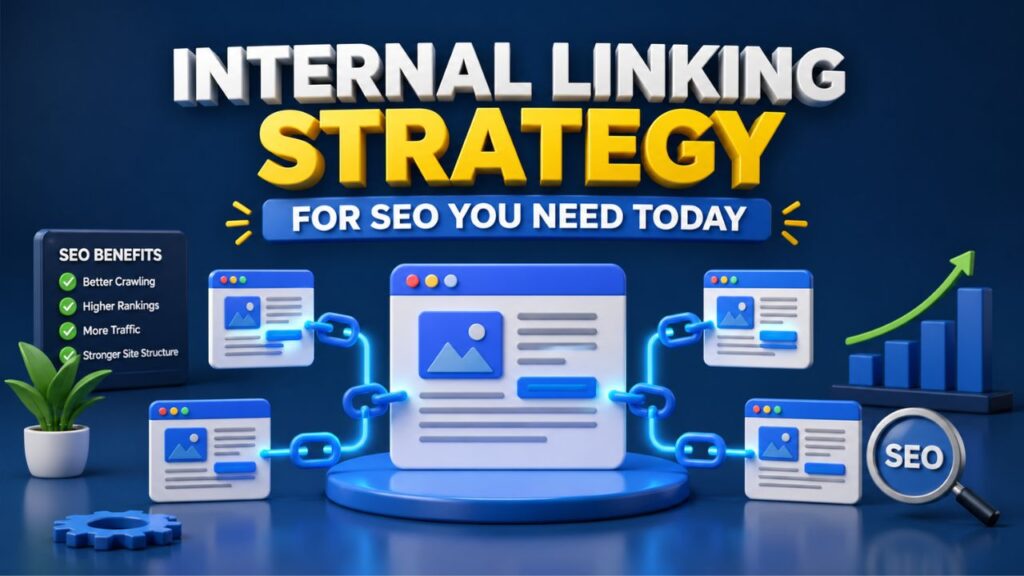
If you want stronger rankings, better crawling, and a smoother user journey, you cannot ignore your internal links. A smart internal linking strategy for SEO helps search engines understand your site, connect related pages, and prioritize the content that matters most. It also helps your visitors move from one helpful page to another without friction.
Many site owners spend a lot of time on content creation and Link Building, yet they still overlook one of the most controllable SEO assets on their own website. That is where a strong internal linking strategy changes the game. When you link pages with purpose, you improve structure, relevance, and visibility at the same time.
In this guide, we will break down what an internal linking strategy for SEO is, why it matters, how to build one, and what mistakes you should avoid. If you want a site that is easier to crawl, easier to navigate, and better positioned to rank, this is where you should start.
Table of Contents
What Is an Internal Linking Strategy for SEO?
An internal linking strategy for SEO is a planned approach to linking pages within your own website. Instead of adding links randomly, you connect pages based on topic, user intent, and business value.
Internal links point from one page on your domain to another page on the same domain. They help search engines discover content, understand relationships between pages, and pass value from strong pages to pages that need more visibility.
A good internal linking strategy for SEO is not about stuffing links everywhere. It is about using the right links in the right places so both users and search engines can move through your site with clarity.
Internal Links vs External Links
Internal links connect your own pages. External links point to or come from another website.
Both are useful. External links and Link Building can improve authority and trust from outside sources. Internal links help you control how that value moves across your own website. Together, they support a complete SEO plan.
Why Internal Linking Is Different From Link Building
Link Building focuses on earning backlinks from other websites. Those links can increase your domain authority and strengthen trust signals. But once authority enters your site, you still need a system to distribute it well. That is where an internal linking strategy for SEO becomes essential.
You can think of backlinks as incoming strength and internal links as the path that spreads that strength where it is needed most.
Why Internal Linking Matters More Than Ever
Search engines have become far better at understanding topics, intent, and relationships between pieces of content. That means your site structure matters more than ever. A strong internal linking strategy for SEO helps search engines see which pages are most important and how your content fits together.
It also improves how users interact with your site. When readers naturally find related articles, guides, service pages, or resources, they stay longer and engage more deeply.
Here are the biggest reasons internal linking matters today.
It Helps Search Engines Discover Your Content
Search bots follow links. If an important page has no internal links pointing to it, that page may be harder to find or may not get enough crawl attention. A clean internal linking strategy for SEO reduces the chance of orphan pages and improves indexation.
It Builds Topical Relevance
When you link related pages together, you create semantic connections. Search engines can better understand that your site covers a subject in depth. This strengthens topical authority and supports better rankings for related queries.
It Improves User Experience
Users do not want dead ends. They want useful next steps. A solid internal linking strategy keeps readers moving toward more relevant content, which often improves time on site, page views, and engagement.
It Supports Conversions
Internal links are not only for blog posts. They can guide users from informational content to service pages, contact pages, lead magnets, or product pages. That means a smart internal linking strategy for SEO supports both rankings and business goals.
Core Elements of a Strong Internal Linking Strategy
Not all internal links carry the same value. The strength of your strategy depends on how intentionally you use them.
Relevance
Always link pages that genuinely connect. If a page is about technical SEO, link it to crawlability, indexing, site structure, or page speed content. Relevance helps both search engines and readers.
Anchor Text
Anchor text tells users and search engines what the linked page is about. Generic phrases can work occasionally, but descriptive anchor text usually adds more context. In a strong internal linking strategy for SEO, anchor text should feel natural, clear, and helpful.
Page Priority
Some pages matter more than others. These may include service pages, high converting pages, pillar content, or pages targeting valuable keywords. Your linking structure should support those pages more deliberately.
Site Hierarchy
A website should not feel flat or chaotic. It should feel organized. Your homepage, category pages, pillar pages, blog posts, and supporting pages should work together in a clear hierarchy. A thoughtful internal linking strategy for SEO helps reinforce that structure.
Contextual Placement
Links placed naturally inside the body content often carry more value than links placed in crowded sidebars or repetitive footers. Context matters because it shows why the linked page is relevant in that moment.
How to Build an Internal Linking Strategy for SEO
If you want results, you need more than theory. You need a process you can follow consistently.
1. Audit Your Existing Content
Start by reviewing your current pages. Look for:
- pages with traffic
- pages with backlinks
- pages with conversions
- pages with no internal links
- pages buried too deep in your structure
This first step reveals where your strongest content already exists and where your internal linking strategy for SEO is weak.
2. Identify Your Most Important Pages
Every site has priority pages. These may be core service pages, cornerstone blog posts, category pages, or key landing pages. Decide which pages deserve more visibility and more internal support.
If you do not choose your priorities, your site structure will stay random.
3. Group Content by Topic
Now cluster related content. If you have a pillar page on SEO basics, link supporting pages about keyword research, on page SEO, technical SEO, and content strategy back to that main page. This makes your internal linking strategy stronger because it builds thematic relevance.
Topic clusters are especially useful for informational sites because they help search engines understand content depth.
4. Add Contextual Links Naturally
When you mention a concept already covered on another page, link to it. Do it where it helps the reader. Do not force it. A good internal linking strategy for SEO feels helpful, not manipulative.
For example, if you are writing about content planning and briefly mention site architecture, linking to a deeper guide on site structure makes sense.
5. Support Important Pages From Strong Pages
Pages with authority, backlinks, or steady traffic can pass value through internal links. This is one of the most useful parts of an internal linking strategy for SEO. Instead of letting authority sit on one blog post, you can guide some of that strength toward pages that need a boost.
6. Update Older Content Regularly
Old posts are often missed opportunities. If they still get traffic or have backlinks, update them with new internal links to newer, more strategic content. This refresh helps keep your internal linking strategy for SEO current and effective.
Best Practices You Should Follow Today
A good strategy is built on habits. These best practices make your internal linking more useful and more scalable.
Link Where the Reader Needs More Depth
The best internal links usually answer the next question in the reader’s mind. If you mention crawl budget, link to a guide on crawl optimization. If you mention content clusters, link to a page that explains them fully.
Keep Important Pages Close to the Homepage
The deeper a page sits in your site, the less likely it is to get attention. Try to keep high value pages accessible within a reasonable number of clicks. Your internal linking strategy should reduce unnecessary depth.
Use Natural Anchor Text Variations
You do not need the same anchor every time. Variation makes your profile look more natural and improves readability. Just keep it relevant and specific.
Avoid Overlinking
Too many links on one page can make content noisy and reduce clarity. Your internal linking strategy for SEO should focus on useful links, not maximum links.
Fix Orphan Pages
If a page matters, it should not stand alone. Every important page should receive internal links from related content. This is one of the fastest ways to improve a weak internal linking strategy for SEO.
Link Informational Pages to Commercial Pages Carefully
Informational content often attracts traffic and backlinks. Commercial pages often drive conversions. Internal links can connect the two without harming user experience. This is one reason an internal linking strategy for SEO supports both growth and revenue.
Common Internal Linking Mistakes to Avoid
Even good content can underperform when the internal structure is weak. Here are mistakes you should avoid.
Linking Unrelated Pages
If a page has no real topical connection, do not link it just to add another internal link. Irrelevant links confuse search engines and weaken the reader experience.
Using Generic Anchors Too Often
Phrases like “click here” or “read more” are not always wrong, but they often miss a chance to add context. Descriptive anchors usually work better.
Ignoring High Value Pages
Many websites keep linking blog posts to other blog posts but fail to support service or category pages. Your internal linking strategy for SEO should help the pages that matter most to your business.
Relying Only on Navigation Links
Menus and footers are useful, but they are not enough. Contextual in content links are still one of the strongest parts of an effective internal linking strategy.
Never Reviewing Old Content
Publishing new articles without updating old ones creates gaps. Internal linking should be ongoing, not one time.
Internal Linking Strategy for Different Types of Websites
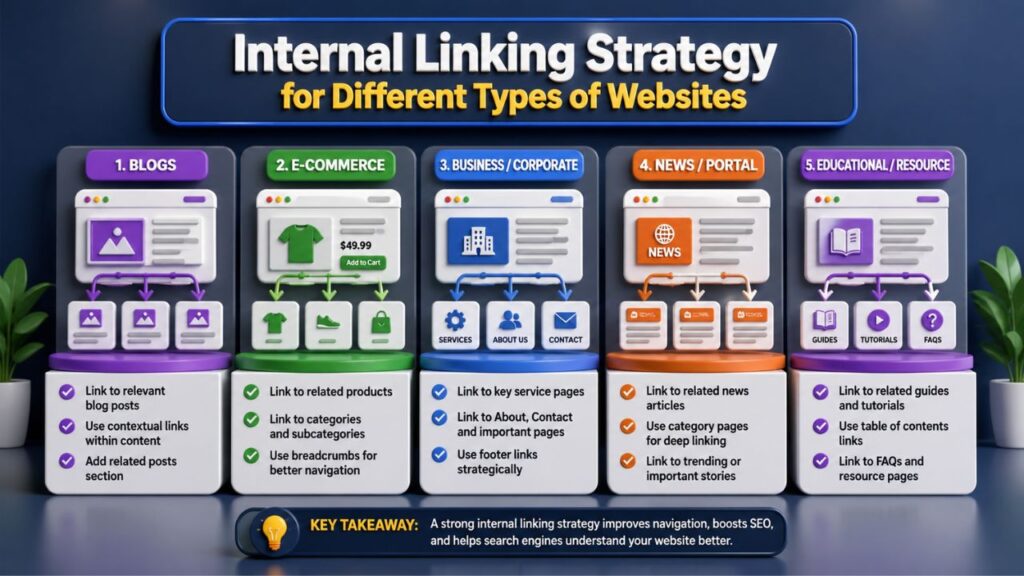
Not every website uses internal links the same way. The principles stay similar, but the application changes.
Blogs
Blogs should connect related articles into topic clusters. This helps readers explore a subject deeply and helps search engines understand topic authority. A blog based internal linking strategy for SEO works best when supporting articles feed into stronger pillar pages.
Service Based Websites
Service websites should link blog content to service pages where appropriate. Educational content builds trust, and internal links guide interested users toward the next step.
Ecommerce Websites
Ecommerce sites can link between categories, subcategories, related products, buying guides, and FAQs. A clear structure improves crawlability and shopping flow.
Local Business Websites
Local businesses can connect service pages, city pages, blogs, testimonials, and FAQs. This supports local relevance and helps users find location specific information more easily.
How to Measure the Success of Your Internal Linking Strategy?
You should not guess whether your strategy is working. You should track results.
Look at:
- growth in organic traffic
- increased impressions for priority pages
- better ranking movement
- fewer orphan pages
- improved crawlability
- stronger user engagement
- assisted conversions from informational content
If you notice that linked pages gain more impressions, better indexation, or improved user flow, your internal linking strategy for SEO is doing its job.
Tools like Google Search Console, Google Analytics, and crawling software can help you review internal links, click depth, and page relationships more accurately.
Final Thoughts
A strong internal linking strategy for SEO is one of the most practical improvements you can make on your website. It does not depend on luck, trends, or third party decisions. It is fully within your control.
When you link pages with intent, you help search engines understand your site better and help users move through your content more naturally. You also make your best pages easier to discover, support your broader Link Building efforts, and create a more organized site structure.
If you want better SEO performance today, do not treat internal linking as an afterthought. Start with your most valuable pages, connect related content with purpose, and keep refining the system as your site grows. That is how a real internal linking strategy for SEO turns into long term ranking strength.
Frequently Asked Questions
What is an internal linking strategy for SEO?
An internal linking strategy for SEO is a planned method of connecting pages within your own website to improve crawling, indexing, topical relevance, and user navigation.
Why is internal linking important for SEO?
Internal linking helps search engines discover your content, understand page relationships, and pass value across your site. It also improves the user experience.
How is internal linking different from Link Building?
Link Building focuses on acquiring backlinks from other websites. Internal linking focuses on connecting pages within your own website to distribute authority and guide users.
How many internal links should a page have?
There is no fixed number. The right amount depends on the page length, topic, and how many genuinely relevant supporting pages you have.
Does internal linking help rankings?
Yes. A thoughtful internal linking strategy for SEO can support rankings by improving crawlability, strengthening topical signals, and helping important pages receive more internal support.
How often should I update my internal links?
You should review them regularly, especially when you publish new content, update older content, or want to improve visibility for key pages.


