

If you want consistent organic traffic, publishing random blog posts is no longer enough. Search engines reward websites that publish structured, relevant, and helpful content regularly. That is why every successful website today relies on a strong seo content strategy.
Learning how to create seo content plan is one of the most valuable skills in modern digital marketing. When you plan content strategically, you stop guessing and start growing traffic predictably.
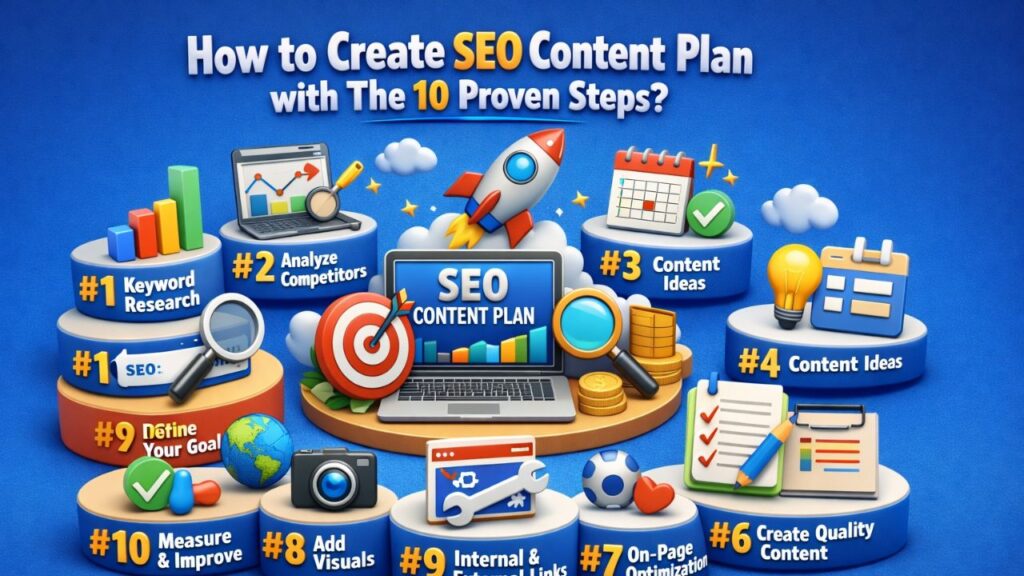
This guide walks you through the exact 10 steps you need to build a content plan that drives visibility, authority, and long-term growth.
Table of Contents
Step 1: Understand the Purpose of an SEO Content Plan
Before you start writing, you need clarity.
An SEO content plan is a roadmap that aligns your content with audience needs and search engine expectations. Without it, your publishing efforts become inconsistent and unfocused.
A structured plan helps you:
- Target the right topics
- Publish consistently
- Build authority over time
- Improve long-term SEO Ranking
When you understand the purpose behind planning, learning how to create seo content plan becomes easier and more strategic.
A content plan ensures your website speaks to both users and search engines at the same time.
Step 2: Identify Your Target Audience and Search Behavior
Your content exists for people first and algorithms second.
Understanding your audience helps you create helpful content that solves real problems. This is where search intent optimization for seo begins.
Focus on:
- What problems your audience is trying to solve
- What questions they ask online
- What type of content they prefer
When you truly understand your audience, your content naturally aligns with their expectations.
This is a foundational step in mastering how to create seo content plan because great content always starts with understanding readers.
Step 3: Perform Smart Keyword Research
Keyword research is the backbone of every successful content plan.
Instead of targeting random keywords, focus on:
- High intent keywords
- Long-tail keywords
- Topic-based keyword groups
Keyword research helps you build a structured seo content strategy that supports long-term growth.
When done correctly, it allows you to map keywords to the buyer journey and plan content that attracts visitors at every stage.
This step is essential when learning how to create seo content plan that delivers measurable results.
Step 4: Analyze Competitors and Find Content Gaps
Competitor research reveals opportunities you might miss otherwise.
Study:
- What topics competitors rank for
- Which keywords drive their traffic
- Which content formats perform best
Your goal is not to copy them but to create better and more helpful content.
Finding gaps allows you to publish articles that fill missing information in your niche. This strengthens your Content Marketing approach and improves visibility faster.
Understanding competitor gaps is a critical part of how to create seo content plan effectively.
Step 5: Plan Content Around Search Intent
Search engines prioritize content that matches user intent.
There are four main types of intent:
- Informational
- Navigational
- Commercial
- Transactional
When your content matches intent, it satisfies users and signals relevance to search engines.
This is why search intent optimization for seo plays a major role in planning.
It also explains how google understands content relevance. Search engines evaluate whether your content answers the exact question a user is searching for.
This step is central to mastering how to create seo content plan that ranks.
Step 6: Build Topic Clusters and Pillar Pages
Modern SEO focuses on topics rather than individual keywords.
That is why content clusters for seo ranking are essential.
Topic clusters include:
- A pillar page covering a broad topic
- Multiple supporting articles covering subtopics
- Strong internal linking between them
This structure helps search engines understand your website better and improves authority. Clusters also help organize AI Content into a logical structure, making it more useful and readable. Implementing clusters is a key part of learning how to create seo content plan that drives long-term traffic.
Step 7: Create a Content Calendar That Works
Consistency builds trust.
A content calendar helps you:
- Maintain publishing frequency
- Stay organized
- Avoid content gaps
- Plan seasonal and trending topics
Regular publishing strengthens your seo content strategy and improves visibility over time.
A calendar turns strategy into action and simplifies how to create seo content plan for sustainable growth.
Step 8: Focus on Building Topical Authority
Authority is one of the biggest ranking factors today.
Topical authority in seo explained simply means becoming a trusted source in your niche.
You build authority by:
- Covering topics deeply
- Publishing consistently
- Updating content regularly
This approach also supports AI Content Optimized for E-E-A-T, ensuring content reflects expertise, experience, authority, and trust. This step is essential for mastering how to create seo content plan that delivers long-term results.
Step 9: Optimize Content for Relevance and Structure
To rank well, content must be optimized properly.
This includes:
- Clear headings and subheadings
- Logical structure
- Internal linking
- Keyword placement
- Readability improvements
These are core Content Optimization Strategies that improve discoverability. They also demonstrate how google understands content relevance by helping search engines interpret your content correctly.
Optimization is a critical part of how to create seo content plan that consistently performs.
Step 10: Measure, Improve, and Update Content
Publishing content is only the beginning.
To maintain growth, track:
- Traffic
- Engagement
- Rankings
- Click-through rates
Updating older articles improves performance and strengthens SEO Indexing signals. Continuous improvement is the final step in mastering how to create seo content plan successfully.
Common Mistakes to Avoid
Avoid these common planning mistakes:
- Ignoring search intent
- Publishing inconsistently
- Skipping keyword research
- Not updating old content
Remember, Content is King, but only when it is strategic and helpful.
Tools That Make SEO Content Planning Easier
Helpful tools include:
- Keyword research tools
- Analytics tools
- Planning and calendar tools
- Optimization platforms
These tools simplify how to create seo content plan and improve efficiency.
Conclusion
A successful content plan is not about publishing more. It is about publishing smarter. By following these 10 proven steps, you can build a powerful seo content strategy that drives consistent organic growth.
Once you understand how to create seo content plan, you stop guessing and start growing. The key is consistency, relevance, and continuous improvement.
Start implementing these steps today and watch your content performance improve steadily.
FAQs
What is an SEO content plan?
It is a roadmap that guides what content to create, when to publish it, and how to optimize it for search engines.
How long does it take to see results?
Most websites start seeing measurable results within 3–6 months of consistent publishing.
How often should content be updated?
Review and update key articles every 6–12 months for best performance.
Why is search intent important?
Matching intent ensures your content answers user queries and improves rankings.
Can beginners learn how to create seo content plan easily?
Yes. By following a structured framework and publishing consistently, anyone can build an effective plan.


