

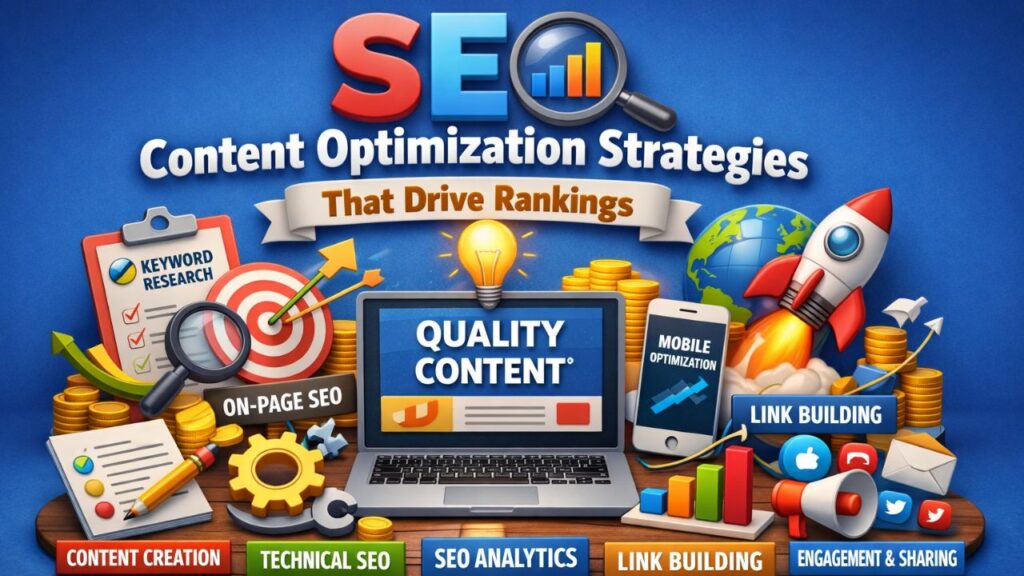
Ranking on the first page of Google is no longer about publishing more content. It’s about publishing better-optimized content that aligns with search intent, user experience, and Google’s evolving quality signals. If you want consistent visibility, traffic, and authority, you need to go beyond basic SEO tactics and focus on seo content optimization strategies that actually move the needle.
This guide walks you through proven, practical techniques to help your content rank higher, stay relevant longer, and outperform competitors in competitive SERPs.
Table of Contents
Why Content Optimization Is Critical for SEO Success
Search engines have become exceptionally good at identifying content that genuinely helps users. Simply targeting keywords is no longer enough. Google evaluates structure, clarity, topical depth, freshness, and engagement signals before rewarding rankings.
Effective seo content optimization strategies ensure that your content:
- Matches the exact intent behind a search query
- Is easy to read and navigate
- Demonstrates topical authority
- Stays relevant as search behavior evolves
When optimization is done right, rankings improve naturally — without shortcuts or risky tactics.
How Google Evaluates Optimized Content Today?
Google’s algorithms now prioritize helpful, people-first content. This means your content must answer questions clearly, provide depth, and follow logical structure.
Some of the key evaluation factors include:
- Search intent alignment (informational, navigational, or transactional)
- Content organization and hierarchy
- Readability and engagement
- Internal linking and topical relevance
- Freshness and updates over time
Modern seo content optimization strategies focus on delivering value while making it easy for search engines to understand what your page is about.
Core SEO Content Optimization Strategies That Drive Rankings
Align Content With Search Intent
Before writing or optimizing any content, ask yourself: What does the searcher actually want? If your page doesn’t satisfy that intent, rankings won’t last.
Strong seo content optimization strategies always start with intent matching — whether users want a guide, a solution, or a comparison.
Optimize Headings and Content Flow
Your headings should guide readers logically through the topic. Clear H1, H2, and H3 usage improves scannability and helps search engines understand content relationships.
A well-structured page keeps users engaged longer, which positively impacts rankings.
Strategic Keyword Placement (Not Stuffing)
Keywords should appear naturally in:
- Headings
- Introductions
- Supporting paragraphs
- Internal anchor text
Search engines reward relevance, not repetition. Smart seo content optimization strategies focus on context rather than density.
SEO Friendly Content Structure Checklist
A clear structure improves crawlability, usability, and engagement. Use this seo friendly content structure checklist to ensure your content meets ranking standards:
- One clear H1 per page
- Short paragraphs (2–3 lines max)
- Descriptive subheadings
- Bullet points and numbered lists
- Logical internal linking
- Clean URL structure
- Optimized images with alt text
When content is easy to consume, users stay longer — and Google notices.
On Page SEO Mistakes to Avoid in Content
Many pages fail to rank due to avoidable errors. Understanding on page seo mistakes to avoid in content can save months of lost visibility.
Common mistakes include:
- Overusing keywords unnaturally
- Ignoring meta titles and descriptions
- Publishing thin or repetitive sections
- Weak internal linking
- Poor mobile readability
Avoiding these mistakes allows your optimization efforts to compound instead of canceling each other out.
Improving Content Readability for SEO and Users
Readability is no longer optional. Improving content readability for SEO directly impacts engagement, dwell time, and conversions.
To improve readability:
- Write in a conversational tone
- Use simple language without dumbing down concepts
- Break up long sentences
- Add transition words for flow
- Optimize spacing for mobile users
When readers enjoy your content, they trust it — and that trust translates into rankings.
Keyword Cannibalization and Content Structure Fixes
Publishing multiple pages targeting the same keyword can silently hurt rankings. This issue, known as cannibalization, confuses search engines and splits authority.
Effective keyword cannibalization and content structure fixes include:
- Consolidating overlapping pages
- Creating pillar pages with supporting cluster content
- Using internal links to define topic hierarchy
- Updating older content instead of duplicating topics
Fixing cannibalization often leads to immediate ranking improvements without creating new content.
Content Update Frequency to Boost Rankings
Content freshness plays a significant role in long-term SEO success. Following the right content update frequency to boost rankings keeps your pages competitive.
Instead of publishing new posts constantly:
- Refresh statistics and examples
- Improve headings and clarity
- Add new subtopics or FAQs
- Update internal links
Search engines reward pages that stay current and accurate, especially in competitive niches.
Advanced SEO Content Optimization Strategies for Competitive SERPs
Once the basics are covered, advanced seo content optimization strategies help you compete for high-difficulty keywords.
These include:
- Analyzing top-ranking competitors for content gaps
- Optimizing sections for featured snippets
- Adding FAQ sections to expand semantic coverage
- Strengthening internal links with descriptive anchor text
Advanced optimization isn’t about tricks — it’s about outperforming expectations.
How to Measure Content Optimization Success?
Tracking performance helps refine your seo content optimization strategies over time. Key metrics to monitor include:
- Keyword rankings
- Click-through rate (CTR)
- Time on page
- Bounce rate
- Organic traffic growth
Use Google Search Console and analytics data to identify what’s working and where improvements are needed.
Common Content Optimization Myths That Hurt Rankings
Many site owners still believe outdated SEO myths, such as:
- More words always mean better rankings
- Keyword density is a ranking factor
- Updating content too often boosts SEO
In reality, quality, clarity, and intent alignment matter far more than outdated formulas.
Final Thoughts
Successful SEO isn’t about chasing algorithms — it’s about serving users better than anyone else. When you apply seo content optimization strategies consistently, your content becomes easier to find, easier to read, and easier to trust.
Focus on structure, readability, intent, and freshness. Over time, rankings follow naturally — and they last.
Frequently Asked Questions (FAQs)
1. What are SEO content optimization strategies?
SEO content optimization strategies are methods used to improve content structure, relevance, readability, and freshness so search engines can better understand and rank a page. These strategies focus on aligning content with search intent, improving user experience, and maintaining topical authority.
2. How do SEO content optimization strategies help improve rankings?
Effective seo content optimization strategies help search engines identify your content as helpful and authoritative. When content is well-structured, easy to read, and regularly updated, it earns better engagement signals, which increases its chances of ranking on the first page of Google.
3. What are the most common on page SEO mistakes to avoid in content?
Some of the most common on page seo mistakes to avoid in content include keyword stuffing, poor heading structure, thin content sections, missing internal links, and ignoring mobile readability. These issues can limit crawlability and reduce ranking potential.
4. How can I fix keyword cannibalization issues on my website?
Keyword cannibalization and content structure fixes usually involve consolidating overlapping pages, creating clear pillar and cluster content, and strengthening internal linking. This helps search engines understand which page should rank for a specific keyword.


