

If your website isn’t ranking the way you expect, the issue is often hidden beneath the surface. That’s where a structured approach becomes essential. This SEO audit guide walks you through everything you need to evaluate, fix, and improve your website’s performance.
When you follow a well-defined SEO audit process, you don’t just identify problems—you uncover opportunities. From improving technical SEO to refining your content and backlinks, an audit helps you build a stronger foundation for sustainable growth.
In this guide, you’ll learn how to perform a complete SEO audit step by step, so you can boost rankings, increase visibility, and drive consistent organic traffic.
Table of Contents
What is an SEO Audit and Why It Matters?
An SEO audit is a detailed evaluation of your website to identify issues that affect its visibility in search engines. It examines technical structure, content quality, user experience, and backlink profile.
In simple terms, it tells you what’s working, what’s not, and what needs improvement.
Why It Matters
- Helps improve search rankings
- Enhances user experience
- Fixes crawling and indexing issues
- Aligns your site with search engine guidelines
If you’re serious about growth, this SEO audit guide is not optional—it’s essential.
Types of SEO Audits You Must Know
Before diving into the SEO audit process, it’s important to understand the different types of audits:
| Audit Type | Focus Area | Outcome |
| Technical Audit | Site performance & structure | Better crawlability |
| On-Page Audit | Content & HTML elements | Improved relevance |
| Off-Page Audit | Backlinks & authority | Stronger domain trust |
| Content Audit | Content quality & optimization | Higher engagement |
Each type plays a role in building a Comprehensive SEO Strategy.
Complete SEO Audit Process (Step-by-Step)
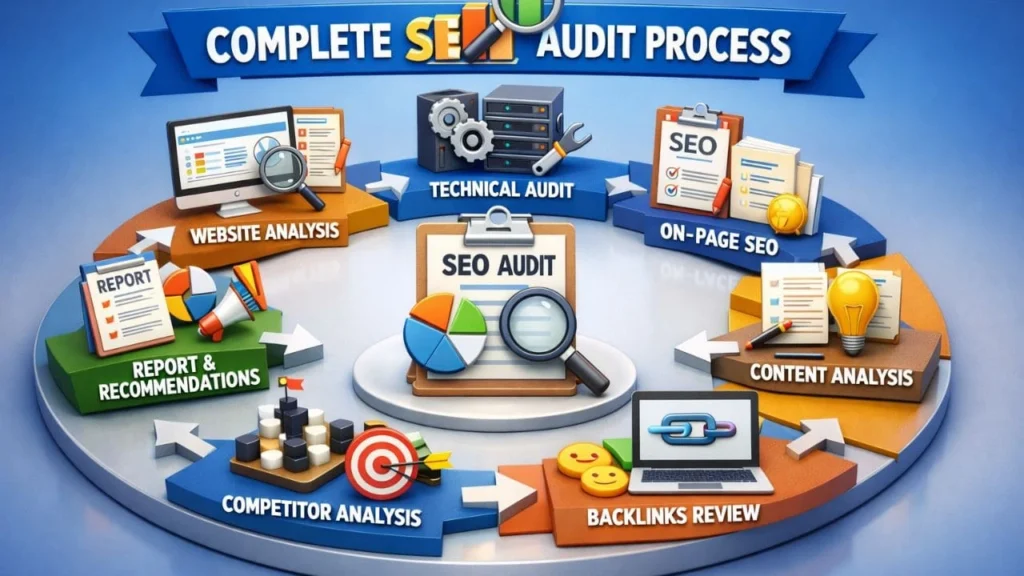
Let’s break down the exact SEO audit process you can follow.
Step 1: Website Crawl Analysis
Start by crawling your website to understand how search engines view it.
What to check:
- Broken links
- Duplicate pages
- Redirect chains
- Crawl errors
This step lays the foundation for your entire SEO audit guide.
Step 2: Technical SEO Evaluation
Your website’s backend determines how well it performs in search results.
Key elements of technical SEO:
- Page speed optimization
- Mobile responsiveness
- Secure HTTPS connection
- XML sitemap and robots.txt
You should also align your findings with a structured technical SEO checklist to ensure nothing is missed.
Ignoring technical SEO can prevent even the best content from ranking.
Step 3: On-Page SEO Audit
This step focuses on optimizing individual pages.
Key factors:
- Title tags and meta descriptions
- Proper header structure
- Keyword placement
- Internal linking
To go deeper, incorporate advanced on page SEO techniques such as semantic keyword usage, content structuring, and intent alignment.
Step 4: Content Audit
Content is one of the most critical ranking factors.
Evaluate:
- Thin or low-value content
- Duplicate content
- Outdated pages
- Keyword optimization
You should also identify common SEO Content Mistakes, such as keyword stuffing or lack of structure, and refine your SEO Content Plan to align with search intent.
Step 5: Backlink Analysis
Backlinks signal authority and trust.
What to analyze:
- Quality of backlinks
- Toxic links
- Anchor text distribution
- Competitor backlinks
Removing harmful links and building quality ones can significantly improve rankings.
Step 6: User Experience and Core Web Vitals
Search engines prioritize user experience.
Focus on:
- Page load speed
- Mobile usability
- Layout stability
- Bounce rate
A smooth user experience directly supports your technical SEO efforts.
Step 7: Competitor Analysis
To outperform competitors, you need to understand them.
Analyze:
- Their top-performing keywords
- Content strategy
- Backlink profile
This helps you refine your approach and build a stronger Comprehensive SEO Strategy.
SEO Audit Checklist (Quick Summary)
Here’s a quick checklist from this SEO audit guide:
Technical SEO
- Website speed optimized
- Mobile-friendly design
- Proper indexing
On-Page SEO
- Optimized meta tags
- Structured headers
- Internal linking
Content
- High-quality, relevant content
- No duplication
- Updated regularly
Backlinks
- High-quality links
- No toxic links
Common SEO Audit Mistakes to Avoid
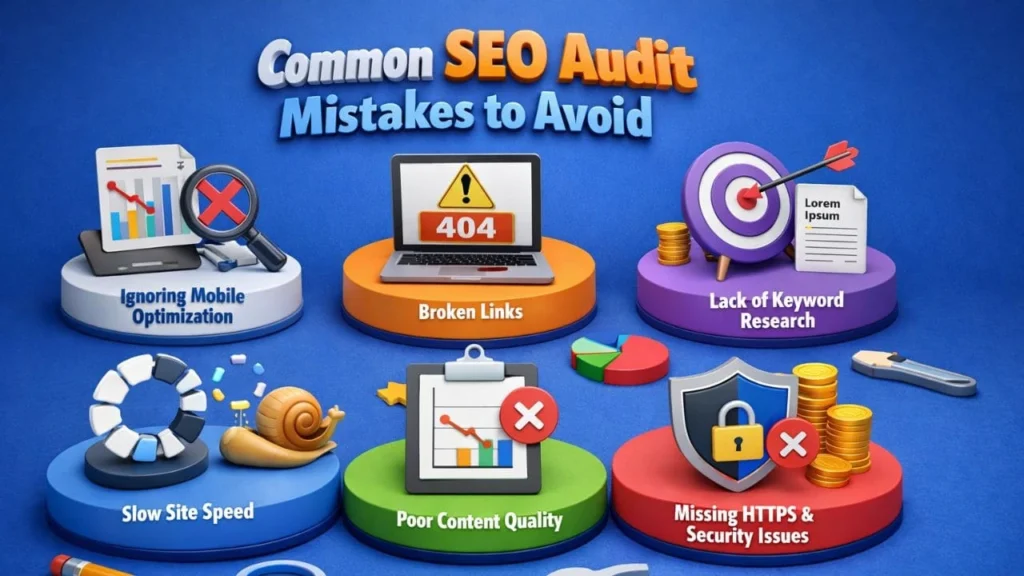
Even with a solid SEO audit process, mistakes can happen.
Avoid these:
- Ignoring technical SEO issues
- Not updating old content
- Overlooking mobile optimization
- Skipping competitor analysis
Fixing these mistakes can significantly improve your results.
Best Tools for SEO Audit
To perform an effective audit, you need the right tools.
Categories:
- Website crawling tools
- Keyword research tools
- Analytics tools
Using these tools simplifies your SEO audit guide and improves accuracy.
How Often Should You Perform an SEO Audit?
The frequency depends on your website size and activity.
- Small websites: Every 6 months
- Medium websites: Quarterly
- Large websites: Monthly
If you’re asking, “How often should I run an SEO audit?”—the answer is simple: regularly enough to stay ahead of issues.
How to Turn Your SEO Audit Into Action?
An audit is only useful if you act on it.
Steps:
- Prioritize critical issues
- Create an action plan
- Assign tasks
- Monitor progress
Following this approach ensures your SEO audit process delivers real results.
Future Trends in SEO Audits
SEO is evolving, and so are audits.
Key trends:
- AI-powered analysis
- Automation tools
- Search intent optimization
- Voice search adaptation
Staying updated helps you keep your technical SEO and overall strategy, competitive.
Conclusion
A well-executed SEO audit guide can transform your website’s performance. By following a structured SEO audit process, you gain clarity on what’s holding your site back and how to fix it.
From improving technical SEO to refining your content and backlinks, every step plays a role in achieving better rankings.
If you want consistent growth, don’t treat SEO audits as a one-time task. Make them a regular part of your strategy—and you’ll see long-term results.
FAQs
What is an SEO audit in simple terms?
An SEO audit is a process of analyzing a website to identify issues affecting its visibility in search engines and improving its performance.
How long does an SEO audit take?
It depends on website size, but typically it can take a few hours to several days.
What is included in a technical SEO audit?
It includes site speed, mobile-friendliness, indexing, crawlability, and security checks.
Can I perform an SEO audit without tools?
Yes, but tools make the process faster, more accurate, and more efficient.
How often should I run an SEO audit?
You should perform an audit regularly—monthly, quarterly, or biannually depending on your website.


