


If you’ve been working on improving your website rankings, you’ve probably come across the debate around keyword stuffing vs natural optimization. On one side, there’s the old-school tactic of repeating keywords as many times as possible. On the other, there’s a modern, user-focused strategy that prioritizes relevance, intent, and readability.
So which approach actually wins in today’s SEO?
In this in-depth guide, we’ll break down the differences, uncover common seo content mistakes, explore thin content seo problems, and discuss duplicate content issues in seo. You’ll also learn practical keyword cannibalization content fixes and understand the poor content structure seo impact that many websites ignore.
By the end, you’ll know exactly how to optimize your content the right way—without risking penalties or losing credibility.
Table of Contents
What Is Keyword Stuffing?
Keyword stuffing is the practice of overloading a webpage with the same keyword or phrase in an attempt to manipulate search engine rankings. Years ago, this tactic worked because search algorithms relied heavily on exact-match keyword frequency.
A typical stuffed paragraph might look unnatural, repetitive, and awkward. The keyword appears in headings, sentences, image alt tags, and meta descriptions far more often than necessary.
Why It Became Popular
In the early days of SEO, search engines weren’t sophisticated. They primarily scanned pages for keyword density. If your page mentioned a phrase 20 times, it often outranked a page that mentioned it five times—even if the content wasn’t helpful.
That loophole led to widespread seo content mistakes, including:
- Repeating keywords unnaturally
- Ignoring readability
- Publishing low-value pages
- Creating multiple similar pages targeting slight keyword variations
But search engines evolved.
Today, algorithms evaluate context, semantic relevance, user engagement signals, and overall value. That shift has made keyword stuffing not only ineffective but potentially harmful.
What Is Natural Optimization?
Natural optimization focuses on writing for users first and search engines second. Instead of obsessing over density, you create content that answers real questions clearly and comprehensively.
When comparing keyword stuffing vs natural optimization, the biggest difference lies in intent. Natural optimization aligns content with what users genuinely want to know.
It includes:
- Contextual and semantic keyword usage
- Clear structure and logical flow
- Depth and topical authority
- Engaging, readable language
Search engines now understand synonyms, related phrases, and topic relationships. That means you don’t need to force repetition. If your content is comprehensive, it will rank for multiple variations automatically.
And yes—high-quality content boosts your SEO when it satisfies user intent, encourages longer sessions, and earns trust.
Keyword Stuffing vs Natural Optimization: A Direct Comparison
Let’s examine keyword stuffing vs natural optimization across key performance factors.
1. Impact on Rankings
- Keyword stuffing: May trigger spam filters or ranking suppression.
- Natural optimization: Supports long-term ranking growth and stability.
Search engines now prioritize helpful, relevant content. Repetitive, low-value pages rarely survive algorithm updates.
2. User Experience
- Keyword stuffing: Feels robotic and difficult to read.
- Natural optimization: Flows conversationally and builds trust.
When readers enjoy your content, they stay longer and explore more pages. That behavioral data strengthens your rankings.
3. Conversion Potential
Content that reads naturally builds credibility. Visitors are far more likely to convert when they feel understood rather than manipulated.
4. Long-Term Sustainability
Keyword stuffing is a short-term gamble. Natural optimization is a long-term strategy aligned with modern search engine guidelines.
The verdict in the keyword stuffing vs natural optimization debate is becoming increasingly clear.
Thin Content SEO Problems: Where Both Strategies Fail
Thin content seo problems occur when pages lack depth, originality, or value. While keyword stuffing often produces thin pages, even naturally written content can underperform if it’s shallow.
Common thin content issues include:
- Extremely short articles with little insight
- Rehashed information without new perspective
- Pages created only to target a keyword variation
- Low informational value
Search engines prefer comprehensive resources that fully address user intent. If your page doesn’t answer the question completely, it’s unlikely to rank consistently.
To avoid thin content seo problems:
- Expand on subtopics thoroughly
- Include relevant supporting sections
- Address related user queries
- Provide structured explanations
Depth matters more than density.
Duplicate Content Issues in SEO
Duplicate content issues in seo occur when identical or very similar content appears across multiple URLs. This can happen intentionally or accidentally.
Common causes include:
- Repeating product descriptions
- Creating multiple location pages with minimal variation
- Republishing blog posts without canonical tags
- URL parameter duplication
Keyword stuffing often contributes to duplication because marketers create multiple pages targeting slight keyword variations instead of consolidating content.
Search engines may struggle to determine which page to rank. As a result, your visibility can drop.
To fix duplicate content issues in seo:
- Use canonical tags
- Merge similar pages
- Redirect outdated URLs
- Rewrite and expand overlapping content
When you clean up duplication, your authority becomes more focused and powerful.
Keyword Cannibalization Content Fixes
Keyword cannibalization happens when multiple pages on your website compete for the same keyword. Instead of boosting visibility, they divide ranking signals.
This is a common outcome of keyword stuffing strategies.
If you’ve created several articles targeting nearly identical phrases, search engines may rotate them in rankings—or ignore them entirely.
Effective keyword cannibalization content fixes include:
1. Consolidation
Combine overlapping articles into one comprehensive resource.
2. Re-Optimization
Adjust keyword focus so each page targets a distinct search intent.
3. Redirects
Use 301 redirects to preserve link equity when merging pages.
4. Internal Linking Improvements
Strengthen topical clusters to clarify content hierarchy.
By implementing proper keyword cannibalization content fixes, you strengthen your site’s authority instead of fragmenting it.
Poor Content Structure SEO Impact
Many websites overlook the poor content structure seo impact on rankings.
Even well-written content can struggle if it lacks:
- Clear headings
- Logical hierarchy
- Scannable formatting
- Internal linking pathways
Search engines rely on structure to understand your page. Users rely on structure to navigate it.
When your content is disorganized:
- Bounce rates increase
- Dwell time decreases
- Crawl efficiency drops
To reduce poor content structure seo impact:
- Use descriptive H2 and H3 headings
- Break content into short paragraphs
- Add bullet points where appropriate
- Create a clear internal linking strategy
Structure supports both usability and crawlability.
How to Transition from Keyword Stuffing to Natural Optimization?
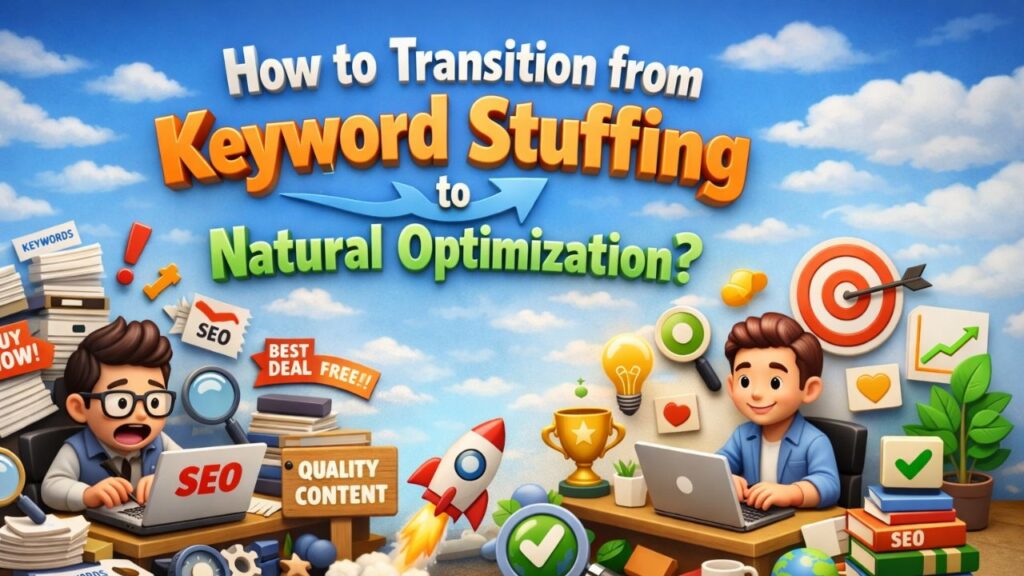
If you’ve relied on repetition in the past, don’t worry. You can shift your strategy effectively.
Here’s how:
1. Focus on Intent First
Before writing, define the exact question your audience wants answered. Strong Keyword Research should guide intent—not just volume.
2. Write Naturally
Use your primary keyword where it fits logically:
- Title
- Introduction
- One or two subheadings
- Conclusion
Then let related phrases appear organically throughout the content.
3. Improve Depth
Avoid thin content seo problems by covering related subtopics thoroughly.
4. Audit for Duplication
Identify duplicate content issues in seo and consolidate pages where needed.
5. Fix Cannibalization
Apply keyword cannibalization content fixes by clarifying content focus.
6. Optimize Structure
Reduce poor content structure seo impact with proper formatting and hierarchy.
Modern SEO Practices That Strengthen Natural Optimization
Today’s optimization strategy goes beyond the keywords.
- Strong Content Marketing builds authority over time.
- Strategic Guest Blogging expands reach and earns quality backlinks.
- Content Creation in the Age of AI requires balancing efficiency with originality and authenticity.
- Structured Data Markup enhances search visibility with rich results.
When these elements align, your content ecosystem becomes stronger and more resilient to algorithm changes.
Why Natural Optimization Wins?

The search landscape has matured. Algorithms analyze context, semantics, engagement, and authority.
In the battle of keyword stuffing vs natural optimization, the winner is clear:
Natural optimization wins because it aligns with how search engines and humans think.
It avoids:
- seo content mistakes
- thin content seo problems
- duplicate content issues in seo
- keyword cannibalization content fixes becoming necessary later
- poor content structure seo impact
Instead, it builds trust, authority, and sustainable rankings.
Final Thoughts
At this point, the answer to the debate around keyword stuffing vs natural optimization should feel clear. While keyword stuffing once offered quick visibility gains, it now leads to seo content mistakes, ranking instability, and long-term damage to your credibility. Search engines have evolved, and so should your strategy.
Natural optimization works because it aligns with how people search, read, and engage online. When you focus on intent, depth, and clarity, you automatically avoid thin content seo problems and reduce the risk of duplicate content issues in seo. Instead of creating multiple competing pages, you build comprehensive resources—and with the right keyword cannibalization content fixes, you can further strengthen your topical authority.
You also minimize the poor content structure seo impact by organizing your ideas clearly, using logical headings, and guiding readers through a meaningful journey. That structure doesn’t just help search engines crawl your site—it helps real users trust you.
If your goal is to reach the first page of Google and stay there, shortcuts won’t get you far. Sustainable rankings come from valuable, well-structured, and naturally optimized content. When you write for people first and optimize intelligently, your content doesn’t just rank—it performs.
In the end, natural optimization doesn’t just win the algorithm. It wins your audience.
Frequently Asked Questions (FAQs)
1. What is the main difference between keyword stuffing vs natural optimization?
The key difference in keyword stuffing vs natural optimization lies in intent and execution. Keyword stuffing focuses on repeating a phrase excessively to manipulate rankings, while natural optimization prioritizes relevance, readability, and user intent. Modern search engines reward context-rich, valuable content rather than high keyword density.
2. Can keyword stuffing still improve rankings?
In most cases, no. Keyword stuffing often results in seo content mistakes that reduce readability and trigger algorithmic penalties. Search engines now analyze semantics, engagement signals, and topical depth, which makes overuse of keywords ineffective and risky.
3. How do thin content seo problems affect my website?
Thin content seo problems occur when pages lack depth, originality, or meaningful value. These pages struggle to rank because they fail to fully satisfy user intent. Thin content can also reduce your overall domain authority if multiple low-value pages exist across your site.
4. What are the most common duplicate content issues in seo?
Common duplicate content issues in seo include repeated product descriptions, similar blog posts targeting slight keyword variations, URL parameter duplication, and copied content across pages. These issues confuse search engines and dilute ranking signals, making it harder for your best page to rank.
5. How can I identify keyword cannibalization on my website?
Keyword cannibalization happens when multiple pages compete for the same keyword. You may notice fluctuating rankings, declining performance, or different URLs appearing for the same query. Applying proper keyword cannibalization content fixes—such as consolidating pages or re-optimizing intent—helps restore clarity and authority.
6. What is the poor content structure seo impact on rankings?
The poor content structure seo impact includes lower engagement, higher bounce rates, and reduced crawl efficiency. When your content lacks clear headings, logical hierarchy, and internal linking, both users and search engines struggle to navigate it. Structured formatting improves readability and ranking potential.
7. How often should I use my primary keyword in an article?
There is no fixed number. Instead of focusing on density, ensure your primary keyword appears naturally in the title, introduction, a few subheadings, and the conclusion. Prioritize clarity and relevance over repetition to avoid falling into keyword stuffing practices.
8. Does natural optimization take longer to show results?
Natural optimization may take slightly longer than aggressive tactics, but it produces sustainable growth. Because it avoids seo content mistakes and technical issues like duplication or cannibalization, it supports long-term ranking stability rather than short-lived spikes.
9. How can I prevent thin content and duplication issues moving forward?
To prevent thin content seo problems and duplicate content issues in seo:
Focus on intent-driven topics
Create comprehensive, in-depth pages
Avoid publishing multiple pages for minor keyword variations
Audit your content regularly
Improve structure and internal linking
A strategic, user-first approach ensures you won’t need constant keyword cannibalization content fixes later.


