

Getting traffic once is not the hard part anymore. The real challenge is building traffic that stays, grows, and keeps working for you month after month. That is where a strong SEO content planning changes everything.
If you publish blogs without a clear plan, you may get a few visits, a few impressions, and maybe a short ranking boost. But if you want long-term results, you need more than content. You need direction. You need structure. You need a system that helps search engines understand your site and helps readers trust what you publish.
A smart SEO content strategy for long term traffic does exactly that. It helps you create content with a purpose, match user intent, build topical authority, improve internal linking, and stay visible across traditional search, AI generated search experiences, answer engines, and voice search.
In this guide, you will learn how to create a content strategy that supports sustainable growth instead of temporary spikes. Whether you run a business website, a blog, or a service based site, this framework will help you build content that keeps bringing value over time.
Table of Contents
What Is an SEO content planning?
An SEO content planning is a structured plan for creating, organizing, optimizing, and updating content so it can rank in search engines and serve your audience at every stage of their journey.
It is not about publishing random blog posts whenever you find a keyword. It is about understanding what your audience is searching for, what kind of pages they need, and how each piece of content supports your larger goals.
When you work with a real SEO content planning, your content stops behaving like isolated pages. It starts working like a connected system. Every article, guide, landing page, and FAQ supports a broader topic, sends stronger relevance signals, and improves the overall authority of your website.
That is why an SEO content planning for long term traffic is not only about rankings. It is also about trust, clarity, and consistency.
Why Long Term Traffic Matters More Than Short Traffic Spikes?
Short term traffic can look exciting in analytics, but it often disappears as fast as it arrives. A trending topic may give you a temporary boost, yet it rarely builds a stable content foundation.
Long term traffic works differently. It grows from evergreen topics, strong site structure, consistent optimization, and content that keeps answering important questions over time.
This kind of traffic matters because:
- It reduces your dependence on constant trend chasing
- It gives you better return from every article you publish
- It supports stronger brand visibility over time
- It attracts users across different stages of the buying journey
- It makes your website more resilient to sudden ranking shifts
If you want Google to trust your website more, you need to show depth and consistency. That only happens when your content strategy is built for the long run.
Start with Search Intent Before You Write Anything
One of the biggest mistakes in content marketing is writing first and thinking about search intent later. That approach usually leads to weak rankings because the page does not fully match what the user wants.
Search intent is the reason behind a query. When someone searches, they may want to learn, compare, evaluate, or buy. Your content needs to align with that intent clearly.
There are four major intent types:
Informational Intent
The user wants to learn something. These searches usually begin with words like what, why, how, when, or guide.
Navigational Intent
The user wants to reach a specific brand, website, or page.
Commercial Intent
The user is researching options before making a decision. They may compare services, tools, or strategies.
Transactional Intent
The user is ready to take action. They may want to buy, sign up, book, or contact.
If your article targets informational intent, do not force heavy sales language into every section. If your page is commercial, do not make it read like a basic beginner guide. Search engines reward relevance, and relevance begins with intent.
A strong SEO content planning for long term traffic always maps each page to one dominant intent.
Build Topic Clusters Instead of Publishing Random Posts
Search engines no longer evaluate content only at the page level. They also look at how deeply your website covers a topic. That is why topic clusters are so effective.
A topic cluster starts with one main pillar page. This page targets a broad topic. Around that pillar, you build supporting articles that cover related subtopics in more detail. Then you connect those pages through internal links.
For example, if your main topic is SEO content planning, your related cluster topics could include:
- keyword research for content planning
- internal linking strategy
- evergreen content creation
- topical authority
- content refresh strategy
- SEO writing for voice search
- content optimization for AI search
This structure helps in several ways. It improves crawlability, strengthens topical relevance, and makes it easier for users to keep exploring your site. It also shows Google that you are not publishing shallow, disconnected articles. You are building subject depth.
When you want long term traffic, topic clusters are one of the smartest ways to scale.
Do Keyword Research with a Long Term Mindset
Many people do keyword research only by checking volume. That is not enough. If your goal is long term traffic, you need to look beyond the numbers.
You should focus on keywords that offer steady relevance, clear intent, and content opportunities that can stay valuable for months or years.
A better keyword process includes:
Primary Keyword
This is the main phrase your article is built around. It should be highly relevant to the page topic and user intent.
Secondary Keywords
These are supporting phrases that expand the article naturally and help search engines understand context.
Long Tail Keywords
These usually have lower competition and stronger intent. They often bring more qualified visitors.
Question Based Keywords
These are perfect for AEO and voice search because they mirror how people ask things naturally.
Semantic and Entity Based Terms
These help strengthen context and improve relevance in both traditional search and AI driven search experiences.
When planning content, ask yourself:
- Can this keyword stay useful over time?
- Does it solve a recurring problem?
- Can I create a better resource than what already ranks?
- Does it fit my topical authority goals?
That is how you move from keyword stuffing to strategic keyword placement.
Create Content for the Full User Journey
A sustainable content strategy should not focus only on top of funnel traffic. You need content for discovery, consideration, and decision making.
If you only publish beginner articles, you may attract visitors but struggle to convert them. If you only create sales focused pages, you may miss people who are still researching.
A complete SEO content planning includes:
Top of Funnel Content
This content builds awareness. It answers broad questions and introduces users to a topic.
Middle of Funnel Content
This content helps users compare, evaluate, and understand solutions in more detail.
Bottom of Funnel Content
This content supports action. It helps users choose, contact, buy, or book.
When your site has content across the full journey, you create stronger content pathways. A visitor can land on an informational guide, move to a comparison article, and then reach a service page through internal links.
That journey supports both SEO performance and business goals.
Structure Your Content for SEO, GEO, AEO, and Voice Search
Modern content should not be written for one search format only. People now discover information through search results, AI summaries, answer engines, and voice assistants. Your content structure should reflect that shift.
Here is how to make your article more future ready.
Use Clear Heading Hierarchy
Your headings should guide both readers and search engines. Use direct and descriptive H2 and H3 headings that reflect search intent.
Answer Important Questions Early
If a section targets a clear question, answer it within the first few lines. This improves your chances of appearing in featured snippets and answer based results.
Write in Natural Language
Voice search queries are conversational. Your content should sound human, clear, and easy to follow.
Keep Paragraphs Short
Short paragraphs improve readability, especially on mobile devices.
Include Lists Where Helpful
Lists make content easier to scan and easier for search engines to interpret.
Add FAQ Style Sections
Frequently asked questions help capture question based queries and improve AEO potential.
This kind of formatting makes your content stronger for traditional SEO and more adaptable for emerging search experiences.
Focus on Evergreen Content That Keeps Ranking
Evergreen content is content that stays useful long after it is published. It answers recurring questions, teaches important concepts, or solves lasting problems.
If you want consistent traffic, evergreen content should be a major part of your strategy.
Good evergreen topics often include:
- guides
- tutorials
- frameworks
- checklists
- definitions
- strategy articles
- beginner to advanced explainers
Evergreen content works best when it is written in a timeless way. Avoid making every paragraph overly dependent on dates or short lived trends unless the topic truly requires it.
That said, evergreen does not mean static. You still need to refresh and improve it. But the core topic remains relevant, which makes it a stronger long term asset.
Build Topical Authority with Depth, Not Just Volume
Publishing more content does not automatically build authority. Publishing better connected content does.
Topical authority comes from showing search engines that your website covers a subject in depth. That means moving beyond surface level articles and creating meaningful content relationships across your site.
To build topical authority, you should:
- cover main topics and supporting subtopics
- answer beginner and advanced questions
- use consistent internal linking
- update older pages to keep them relevant
- avoid publishing thin articles just to target one keyword
If your website has one good page about a topic, that is a start. If it has ten connected, high quality, intent focused pages around that topic, that is a signal of expertise.
When your goal is long term traffic, authority matters. The stronger your topical authority becomes, the easier it is for new pages to perform better.
Internal Linking Is a Growth Tool, Not a Small SEO Task
Internal linking is often treated like a minor cleanup task. In reality, it plays a major role in content performance.
A good internal linking strategy helps search engines discover your pages, understand topic relationships, and pass relevance across the site. It also helps users navigate naturally toward deeper content.
Here is what strong internal linking looks like:
- links from pillar pages to cluster pages
- links from cluster pages back to the pillar
- descriptive anchor text that matches context
- links to related guides, service pages, and FAQs
- regular updates to add links from older high value pages
When you publish new content, do not leave it isolated. Add internal links from existing relevant pages. This gives the new article stronger visibility and context from day one.
For an SEO content planning for long-term traffic, internal linking is one of the highest value habits you can build.
Refresh Existing Content Instead of Only Publishing New Pages
Many websites chase growth by publishing more and more content while ignoring older posts. That often leads to wasted potential.
Sometimes the fastest way to improve traffic is not to write something new. It is to update what already exists.
Content refreshes help you:
- improve outdated information
- add missing subtopics
- strengthen internal linking
- improve keyword targeting
- enhance readability and structure
- align older content with current search behavior
You should review key pages regularly and ask:
- Is the content still accurate?
- Does it answer the main query clearly?
- Is it missing newer user questions?
- Can I improve the formatting for answer engines and voice search?
- Are there better internal linking opportunities now?
Refreshing content keeps your site competitive without forcing you to start from zero each time.
Support Your Content with Technical SEO
Even great content can struggle if the technical foundation is weak. Search engines need to crawl, understand, and index your content properly.
Some technical factors that strongly support content performance include:
Crawlability
Make sure search engines can access your pages through clean navigation and proper internal linking.
Indexability
Your important pages should not be blocked by accidental noindex tags, poor canonical setup, or duplication issues.
Page Speed
Slow pages create a poor user experience and can reduce engagement.
Mobile Usability
Most users now access content on mobile devices. Your content must be easy to read and interact with on smaller screens.
Structured Data
Schema markup can help search engines understand page type, FAQs, articles, and important content details.
Content and technical SEO work together. If you want long term traffic, you need both.
Measure the Right Metrics
A good strategy is not built on guesses. You need data. But you also need to measure the right things.
Do not focus only on ranking positions. Rankings matter, but they are only one piece of the picture.
Track metrics such as:
- organic traffic growth
- impressions
- click through rate
- keyword visibility across topic clusters
- average engagement time
- conversions
- assisted conversions
- returning visitors
- performance of refreshed pages
This helps you understand which topics are growing, which pages are underperforming, and where your next content opportunities exist.
The goal is not just more content. The goal is smarter content decisions.
Common Mistakes That Hurt Long Term Traffic
Even experienced website owners make mistakes that weaken their content strategy. If you want stronger rankings over time, avoid these common issues.
Publishing Without Intent Clarity
A page that tries to serve every purpose often serves none of them well.
Targeting the Same Keyword on Multiple Pages
This creates keyword overlap and weakens page focus.
Ignoring Internal Linking
Without internal links, even strong content can remain underutilized.
Writing Thin Content
A short article is not always a weak article, but a shallow one usually is.
Failing to Update Old Pages
Outdated content loses trust, relevance, and search visibility.
Chasing Only High Volume Keywords
Big volume often brings big competition. Long term growth usually comes from a balanced keyword mix.
Writing for Search Engines Instead of People
If your content sounds robotic, users will leave. Search engines notice that too.
Avoiding these mistakes gives your content a much better chance of performing steadily.
A Practical SEO Content Planning Framework You Can Follow
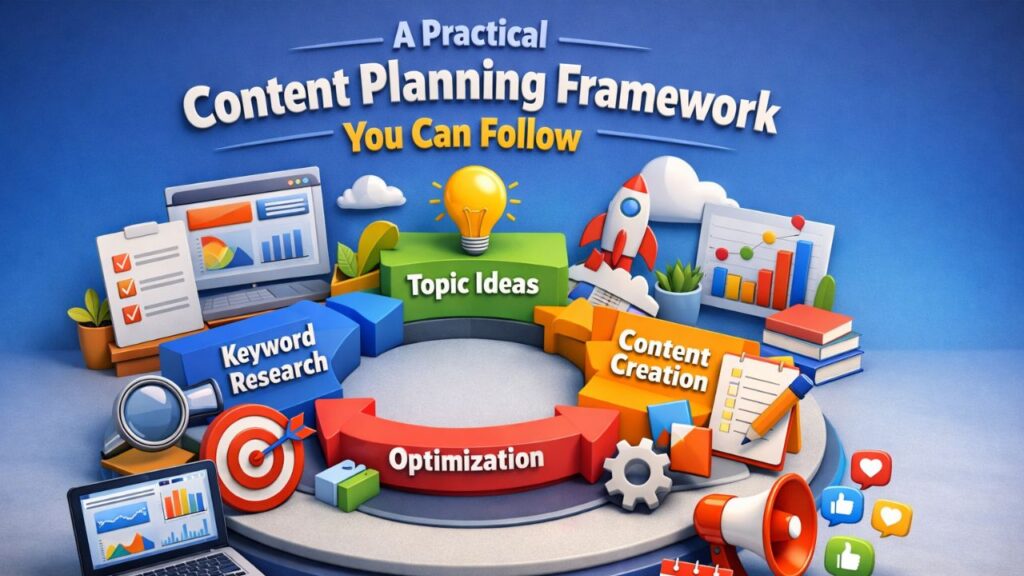
If you want a simple process, use this framework:
1. Choose Your Core Topics
Start with the main subjects your audience cares about and your business wants to own.
2. Map Search Intent
Decide whether each page should inform, compare, or convert.
3. Build Topic Clusters
Create pillar pages and supporting content around each major theme.
4. Do Smarter Keyword Research
Use primary, secondary, long tail, and question based keywords naturally.
5. Write for Humans First
Make content clear, helpful, persuasive, and easy to read.
6. Format for Search and Answers
Use strong headings, direct answers, bullet lists, and FAQs.
7. Add Internal Links
Connect related pages so they support each other.
8. Refresh Content Regularly
Update important pages instead of abandoning them.
9. Track Results
Measure what grows, what fades, and what needs improvement.
10. Repeat with Consistency
SEO rewards structured, repeated effort over random bursts of activity.
This is how you build a real SEO content planning for long term traffic instead of relying on luck.
Final Thoughts
If you want lasting organic growth, you cannot treat content like a one time publishing task. You need to treat it like an asset building process.
A powerful SEO content planning for long term traffic is built on intent, structure, relevance, authority, and consistency. It helps your content rank better, stay useful longer, and perform across more search environments.
When you create content with a clear plan, you are not just trying to rank for one keyword. You are building a system that helps users find you, trust you, and keep coming back.
That is what long term traffic really means. It is not just about getting clicks. It is about earning visibility that compounds.
FAQs
What is SEO content planning?
An SEO content planning is a structured plan for creating and optimizing content so it ranks in search engines, matches user intent, and supports long-term website growth.
Why is long term traffic important in SEO?
Long term traffic gives you more stable visibility, better return on content investment, and stronger authority than short term traffic spikes from temporary trends.
How do topic clusters help SEO?
Topic clusters improve internal linking, strengthen topical relevance, and show search engines that your website covers a subject in depth.
What type of content brings long term traffic?
Evergreen content such as guides, tutorials, checklists, definitions, and strategy based articles often performs well over time when it stays updated.
How often should I update old content?
You should review important content regularly. High value pages should be checked often to ensure the information, structure, and keyword targeting still match current search behavior.
How does voice search affect content strategy?
Voice search favors natural language, question based queries, and direct answers. That is why conversational writing and FAQ style content are important.
What is the role of internal linking in content strategy?
Internal linking helps search engines understand relationships between pages and helps users move through your site more easily. It also strengthens the visibility of important content.
Can I rank without publishing content regularly?
You may still rank for some pages, but long term SEO growth usually depends on consistent publishing, updating, and improving your content system over.

